Showing posts with label Mazda. Show all posts

Wednesday, January 1, 2014

Mazda CX-5 Urban Concept model year 2012

0 comments
Mazda CX-5 Urban Concept model year 2012  From the inside
Mazda CX-5 Urban Concept model year 2012

With a quick glimpse, the Mazda CX-5 Urban appears to be merely shrouded in a matte finish. First impressions have never been more deceiving. Heavily influenced by design, the vision for the Mazda CX-5 Urban was inspired by styles found in fashion and architecture. With a Mazda Design-developed custom paint process, the dark surface of the CX-5 Urban features multi-dimensional shadows with each triangular-like design shaped to reflect each bend and twist of the vehicle's sheet metal. Utilizing the KODO "Soul of Motion" design language of the production model, the Mazda Design team translated this initial blueprint into seemingly flat, black surfaces that evoke depth at just the slight hint of light.

The attention to detail is nothing short of stellar as no two shades of Black Mica touch. For added refinement without deviating from the stealth-like quality of the Mazda CX-5 Urban's dark night appearance, Ore facets appear as thin pinstripes on matte paint surfaces, as an accent outlining the matte black wheels, as a precision feature in the headlamps and as a change of shade to the five-point front grille.

To further sculpt the aggressive nature of the Mazda CX-5 Urban are customized wheel flare extensions which perfectly envelop the well-matched pairing of muscular 22-inch Ace Alloy Scorpio matte black wheels and sticky Nitto Tire NT420s 295/30R20 all-season tires. The CX-5 Urban also features a Racing Beat dual exhaust
 
Mazda CX-5 Urban Concept model year 2012  From the inside
 Mazda CX-5 Urban Concept model year 2012
Mazda CX-5 Urban Concept model year 2012  From the inside
Mazda CX-5 Urban Concept model year 2012  From the inside
Mazda CX-5 Urban Concept model year 2012  From the inside

Friday, December 13, 2013

Mazda CX-5 180 Concept model years 2012

0 comments
Mazda CX-5 180 Concept model years 2012
Mazda CX-5 180 Concept model years 2012 Southern California has a way of being everything for everyone with its rare ability in acting like a four season play palace  all in the same day From the ocean sand to the sandy desert from the high altitudes to the low lands this Western region is an adventurer's paradise Here enters the Mazda CX-5 180 Can't decide what to do with your  lazy Sunday? Do it all Really This CX-5 won't mind Designed to go with the flow whether your plans be set in stone or a last minute  Why not the CX-5 180 is up for any task

Outfitted with Burton Cheetah snowboards for surfing the slopes and a Rusty surfboard for shredding the surf the Mazda CX-5 180 features a stylized topographical map of SoCal locales Big Bear Lake and Point Dume Seasonal statistics for the snow and surf hot spots are featured on the front doors to include temperature highs and lows snowfall and surf rise as well as the all-important digits of GPS coordinates Big Bear Lake's snowy summit is featured along the left side of the vehicle with equipment appropriate snowboards up top while Point Dume's depth details sprawl along the right hand side with the painted to match surfboard topping the chart

Highlighted by custom crafted colors the mapping components featured on the Mazda CX-5 180 include dark hues of Midnight and Denim to reflect depth while lighter shades of Tidal Blue and Bay Blue signify height Dashes of Luminous Red are used across the entire vehicle to indicate roads Rough or paved, the all wheel drive system of the CX-5 180 allows it to maneuver wherever the trail may lead The same red makes its way onto select spokes of the Mazda Design custom-built 20 inch black chrome alloy wheels which are wrapped in all-season Goodyear Eagle® F1 Asymmetric 265/40R20-sized tires for added stability and style A custom matte red finish replaces the stock chrome of the vehicle's five point grille and continues into the headlamps for added aggressiveness A satin chrome dual exhaust by Racing Beat adds a finishing touch

The functional mobility of the Mazda CX-5 180's exterior translates perfectly into the comforts of its interior. Exterior complementing Aqua interior leather is fitted onto the front and rear seats  the steering wheel door panels armrests and the brake boot Contrasting Bright White leather inserts appear on the door panels steering wheel and seats French seam accents in red and white stitching appear on armrests and seats with the red reflecting the exterior's accents representing roads and trails A customized trapezoidal stitching pattern is detailed on the steering wheel which is marked by a subtle white leather strip at the high noon position A custom painted decoration panel in the topography theme of the exterior adds the final touch to the ebb and flow of the Mazda CX 5 180 creating a 360 degree perspective of the vehicle's flexibility regardless of how contradictory the day's activities could be
Mazda CX-5 180 Concept model years 2012
Mazda CX-5 180 Concept model years 2012 From the inside

Wednesday, December 4, 2013

Mazda CX-5 Dempsey Concept model year 2012

0 comments
From the inside Mazda CX-5 Dempsey Concept model year 2012
Mazda CX-5 Dempsey Concept model year 2012 The Mazda CX-5 Dempsey not only features actor and race car driver Patrick Dempsey's name but it was developed with his competitive passions in mind   motorsports and cycling, to be more specific Throughout his professional racing career Dempsey and Mazda Motorsports have been familiar friends with Dempsey seeing seat time behind the wheel of an RX 8 in the GRAND-AM Rolex Series Sleek  sporty and stylishly dressed to take care of business, the CX-5 Dempsey features a high contrast custom paint scheme of glossy grays and matte blacks with bright red highlights Outfitted with a Specialized Bicycle S Works Tarmac road bike and a Thule Atlantis rooftop cargo box no road is unexplorable whether it be a mountain trail or Manhattan traffic Under the hood lurks a European specification SKYACTIV-D 2.2-liter clean diesel engine to power the all-wheel drive system meaning no road is a challenge either

The high-power clean diesel offers a low 14:1 compression ratio with an output of 129 kW at 4,500 rpm and 420 nM of torque at 2,000 rpm Mated to a SKYACTIV-MT six speed manual transmission, the Mazda CX-5 Dempsey offers racing-inspired dynamics and down-right driving fun  two things usually lacking in the compact SUV segment The vehicle sits on Mazda Design-customized 20-inch black chrome alloy wheels encased in Michelin Latitude Sport 255/45ZR20 sized all-season tires. Each wheel is highlighted with a single double-spoke painted in glossy Luminous Red a color used in a limited fashion yet makes an appealing visual impact to the Mazda CX-5 Dempsey Satin chrome touches in the Racing Beat dual exhaust complete the athletic ensemble

The exterior color scheme was developed in coordination with the high-performance  competitive architecture of the Specialized Bicycle road racer Secured to the rear of the vehicle via a Mazda factory hitch and Thule T2 carrier the S Works Tarmac SL4 Red features a Carbon Satin carbon fiber frame with Red Keyline highlights. To match  the Mazda CX-5 Dempsey is receives a glossy Anatomy Gray paint base with thick strips of striking Brilliant Black Luminous Red graphic lines separate the dark layers as Bright White borders and  CX-5 decals emblazon expansive surfaces such as the doors hood and cargo box A Black Mica matte finish details the entire tailgate and continues across the lower portion of the vehicle as well as along the roofline to complete the bicycles Carbon Satin look into the front hood The design theme evokes a rugged functionality and tempered finesse

The composed aggression is maintained throughout the interior as well Black perforated leather inserts are nestled within gray aniline leather bolsters featuring red accents which correlate directly with exterior graphics All leather wrapped the steering wheel shifter boot armrests door panels center storage bin as well as front and rear seats feature contrasting Luminous Red stitching The full-length decorative panel is custom painted in glossy Brilliant Black and features a single Luminous Red outline with a Bright White vehicle model imprint The Mazda CX 5 Dempsey conveys the ambition and awareness that beats within the heart of any competitor regardless of the race route

From the inside Mazda CX-5 Dempsey Concept model year 2012
  Mazda CX-5 Dempsey Concept model year 2012
From the inside Mazda CX-5 Dempsey Concept model year 2012
  Mazda CX-5 Dempsey Concept model year 2012
From the inside Mazda CX-5 Dempsey Concept model year 2012
 Mazda CX-5 Dempsey Concept model year 2012
From the inside Mazda CX-5 Dempsey Concept model year 2012
  Mazda CX-5 Dempsey Concept model year 2012
From the inside Mazda CX-5 Dempsey Concept model year 2012

Wednesday, November 27, 2013

Mazda BT-50 model year 2012

0 comments
 Mazda BT-50 model year 2012 From the inside
Mazda BT-50 model year 2012  At the 2010 Australian International Motor Show in Sydney, Mazda is unveiling the all-new Mazda BT-50 that signifies a new direction in the utility segment. It was developed as an "Active lifestyle vehicle," and is intended to further extend the appeal of a utility from traditional business users to a wide range of customers, including families and pleasure-seekers.

The current BT-50 is Mazda's only offering in the utility segment. It is an established one-tonne utility that has won numerous awards and gained a strong following all over the world. In developing the new model, Mazda intended to expand its appeal to customers who lead active lifestyles and have needs that cannot be met by conventional utilities. It offers all the functionality required for business use combined with passenger car-like comfort for family use; and for active customers in Australia and Europe, it is the perfect answer for all kinds of outdoor leisure activities. In this way, the new BT-50 has been developed to fulfill the varied requirements of customers in every market.

To ensure all these aims were met, the all-new Mazda BT-50 was developed under the theme "Active lifestyle vehicle." The result is a utility that offers unique value; it has refined and expressive styling; a comfortable, high quality interior; a smooth ride with the feel of a passenger car; sporty and responsive driving dynamics that reflect Mazda's DNA; and outstanding environmental and safety performance.

Design: "Sophisticated Beast"

We wanted to design a truck that car lovers would be deeply pleased with and proud to own. We targeted a unique and expressive design that people would find desirable, and we also wanted it to be seen as strong and dependable. This led us to define the design concept as a "Sophisticated Beast."

As Ryo Yanagisawa, chief designer of the all-new BT-50, explains: "Mazda's brand message is Zoom-Zoom, which refers to the emotion of motion first experienced as a child. With the all-new Mazda BT-50, we aimed to express this emotion through the design, and we drew a lot of inspiration from various "movements" in the world around us. For example, we had a photograph of a lion. He looked like a magnificent predator with his muscles all bunching up as though he was about to pounce on his prey. His sinews were stretched taut ready to strike, and his mane framed a sharp, masculine countenance that seemed to say, 'I am the proud king of the beasts!' In profile, that lion appeared to be both intelligent and powerful. I really wanted the design of the truck to project that kind of image. This kind of inspiration was the basis of the emotional design that we worked so hard to achieve with the all-new BT-50."

Exterior - Lively and Imposing Styling

Without detracting from the strength or the level of functionality, we wanted to give the exterior of the all-new Mazda BT-50 an athletic design, overflowing with movement, that would make people immediately want to get in and drive. The crisp lines will have owners looking on with pride.

The finished car has a beauty and individuality that can be recognized at a glance from any angle, even up to 100 meters away.

    Dynamic wedge-shaped proportions evoke an image of a large carnivore about to pounce on its unsuspecting prey. This is unlike any other utility.
    Casting off the conventional boxy image of a utility, sporty and dynamic lines are in tune with the rest of Mazda's passenger vehicle lineup.
    Further evolving Mazda's traditional prominent fenders, muscular lines flow from the fenders along the body sides.

A Front Fascia with a Bold, Overwhelming Presence and an Individual Rear End

    Mazda's family face, the five-point grille, is further evolved for a more imposing expression with the headlights and a chrome crossbar forming a large pentagon.
    The headlights have a bold boomerang shape, elaborate details and a functional beauty.
    A first in the segment — the taillights are stretched horizontally, reaching around the corners and across the tailgate, for a sporty and refined rear view that is similar to a premium SUV.

Interior - A Sporty and Personal Space

We wanted to give the interior of the all-new Mazda BT-50 a more sporty and personal feel to complement the dynamic exterior image, and create a comfortable space to rival Mazda's current passenger car standard. The cockpit is designed to wrap around the driver and provide an environment that supports enthusiastic driving. It raises anticipation for a sporty and responsive driving experience that goes beyond any conventional utility.

    The flowing design smoothly connects the center of the instrument panel to the raised center console, which has never before been seen in a pickup truck.
    The dashboard has an asymmetric design to create optimal space on each side; it reassuringly wraps around the driver and provides an open space for the passenger.
    Four bold metallic panel strips on the door trim and sides of the center console express dynamism and seem to be supporting the interior space.
    A metallic outline highlights the two cylindrical meters and connects them via a center strip to improve readability and enhance the sporty, driver-oriented impression of the instrument panel.
    The audio control panel and the climate control switch panel, which has independent driver- and passenger-side temperature controls, form a beautifully designed human interface.

With modern and refined styling both inside and out, the all-new Mazda Mazda BT-50 will raise the bar in the utility segment and for the first time provide a realistic alternative to the family wagon and 4x4 SUV
 Mazda BT-50 model year 2012 From the inside
 Mazda BT-50 model year 2012
 Mazda BT-50 model year 2012 From the inside
 Mazda BT-50 model year 2012 From the inside
 Mazda BT-50 model year 2012 From the inside

Friday, November 22, 2013

Mazda 3 Sedan model year 2012

0 comments
From the inside  Mazda 3 Sedan model year 2012
Mazda 3 Sedan model year 2012 The 2012 Mazda 3 made its U.S. debut at the 2011 New York International Auto Show. Face-lifted with an even more refined exterior and interior, the 2012 Mazda 3 also is the first application in North America of Mazda's innovative SKYACTIV fuel-saving and performance-oriented technologies, achieving 40 mpg on the highway. The Mazda 3 model is Mazda's best-selling vehicle worldwide and accounts for nearly half of all Mazda sales in the United States, making the vehicle a prime candidate for introducing SKYACTIV to consumers looking for dynamic performance coupled with high fuel efficiency.

 SKYACTIV is not just an engine; it is the next generation of advanced vehicle performance and efficiency said Jim O'Sullivan President and CEO Mazda North American Operations  MNAO  SKYACTIV embodies Mazda's philosophy of engineering only vehicles that are fun to drive, satisfying to own and environmentally responsible; and there is no better vehicle to start with than the Mazda 3, one of the most exciting sport compact cars on the road

Redesigned for the 2010 model year, the refreshed 2012 Mazda 3 is Mazda's first application of SKYACTIV technologies in North America, receiving an all-new SKYACTIV-G gasoline engine as well as the all-new SKYACTIV-Drive six-speed automatic transmission and all-new SKYACTIV-MT six-speed manual transmission. It also features improved sporty driving dynamics, responsive handling and a comfortable cabin space. The exterior design also has been refined to express a bolder stance, alongside new interior appointments creating additional functionality without sacrificing the touch-and-feel quality. Additional safety features complete the package. 

Mazda 3, SKYACTIV Reach New Heights

In addition to the Mazda 3's current MZR 2.0-liter dual-overhead-cam 16-valve four-cylinder engine is the all-new high-efficiency direct-injection SKYACTIV-G 2.0-liter gasoline engine. Mated to a standard SKYACTIV-MT six-speed manual transmission or optional SKYACTIV-Drive six-speed automatic transmission, SKYACTIV will be available in either the sedan or hatchback models. The MZR 2.0-liter engine will continue to be available with the current five-speed manual as standard equipment. MZR 2.0-liter-equipped models also will be available with the current five-speed automatic as an option.

Approximately 4.4 pounds lighter than the current MZR 2.0-liter engine, the SKYACTIV 2.0-liter adopts multi-hole injectors to enhance fuel spray characteristics, along with specially developed piston cavity shapes that ensure a shorter combustion time and suppresses the impact on power and torque from engine knocking. Pumping loss is also decreased by employing dual sequential valve timing (S-VT).

The 2012 Mazda 3 achieves a high compression ratio of 12.0:1 and delivers 155 horsepower at 6,000 rpm and 148 lb-ft of torque at 4,100 rpm. (The PZEV version of this engine sold in California and other states produces 154 hp at 6,000 rpm and 148 lb-ft of torque at 4,100 rpm).

Compared to the current Mazda 3 MZR 2.0-liter engine, the maximum power of the SKYACTIV-equipped 2012 Mazda 3 is increased by approximately five percent (from 148 horsepower at 6,500 rpm) and torque is increased by approximately 10 percent (from 135 lb-ft at 4,500 rpm). With improved torque, coupled with a drive control system that utilizes coordinated controls of the engine and transmission, Mazda 3s with SKYACTIV technology excel in dynamic response, further maintaining the Zoom-Zoom idea of oneness between the car and driver.

Fuel economy also gets a boost from the combination of a SKYACTIV engine and transmissions. When equipped with the SKYACTIV-G gasoline engine and optional SKYACTIV-Drive six-speed automatic transmission, the 2012 Mazda 3 sedan will achieve an EPA rating of 40 mpg on the highway, an approximately 21-percent improvement over the current MZR 2.0-liter engine equipped with the optional five-speed automatic transmission. With a fuel tank capacity of 14.5 gallons, the 2012 Mazda 3 sedan with SKYACTIV has the potential of a 540-mile range, with still a gallon of fuel remaining. City mpg for the sedan version also improves by 17 percent to 28 mpg. When equipped with the SKYACTIV-MT six-speed manual transmission, the sedan is rated with an estimated fuel economy of 27 city/39 highway.

The Mazda 3 sedan with the MZR 2.0-liter has an EPA fuel economy rating of 25 city/33 highway with the standard five-speed manual transmission and 24 city/33 highway with the optional five-speed automatic transmission.

Also, previously only available with the MZR 2.5-liter engine, the Mazda 3 five-door hatchback model will now be offered in the U.S. with the SKYACTIV-G 2.0-liter gasoline engine. This Mazda 3 hatchback is estimated to deliver 27 city/38 highway (SKYACTIV-MT) and 28 city/38 highway (SKYACTIV-Drive AT). The slightly lower highway estimates can be attributed to different aerodynamics and the higher weight ratio between the sedan and hatchback. However, the hatchback's driving range remains impressive with more than 500 miles of driving on the same sized tank as the sedan. The MZR 2.0-liter engine will not be available in the hatchback model.

The higher fuel economy of the 2012 Mazda 3 equipped with SKYACTIV is a direct result of combining all the best features of the technology in today's transmissions. For SKYACTIV-Drive, the key advantages of a conventional automatic transmission, Continuously Variable Transmission (CVT) and Dual Clutch Transmission (DCT) were integrated. In addition, a torque converter with a lock-up clutch was developed to ensure minimal decrease in fuel economy and an increase in direct drive feel.

For SKYACTIV-MT, the goal was to achieve a shift feel that is sporty, brisk and responds to the driver. To accomplish this, not only was the shift-lever stroke shortened by about 10 percent compared to the current six-speed manual (available only in models equipped with the MZR 2.5-liter engine or MZR 2.3-liter Direct-Injection Spark Ignition turbo engine) but other technologies were applied as well: a down type system, lock ball type synchronizer, shift load canceller, slide ball bearing and locating 2nd and 3rd gears on a common shaft. By reconfiguring the current six-speed manual transmission, its weight was reduced by approximately 4.4 pounds due to the need for fewer components, while creating a quicker and crisper shift feel. Call it a little "MX-5 Miata-ness" in the Mazda 3.

Also available on the 2012 Mazda 3 is the highly-acclaimed Mazda MZR 2.5-liter engine. Alongside the SKYACTIV-G 2.0-liter, the MZR 2.5 is a technology powerhouse as well. It offers an aluminum block with cylinder-bore liners made of a steel-molybdenum alloy offering strength and stiffness generally not seen in large-displacement four-cylinder engines. A forged-steel crankshaft provides strength at high revs, but rigidity to ensure low NVH characteristics. Additionally, twin balance shafts located in the oil sump cancel second-order noise and vibration. The deep-skirt block is engineered for extra stiffness and main-bearing caps are integral with a ladder-type lower-block reinforcement. To minimize the noise and vibration typically found on larger displacement four-cylinder engines, the damper at the forward end of the crankshaft is equipped with two tuned masses. At the output end, a flexible flywheel also curbs NVH.

Fuel is delivered to the intake ports by an electronically controlled sequential injection system. Ignition coils are modular units positioned directly above the spark plugs. Shim-less bucket tappets require no maintenance. Lightweight pistons are coated with a special anti-friction compound and fitted with low-tension rings for improved gas mileage. Sintered powder-metal connecting rods and lighter full-floating wrist pins minimize the reciprocating weight.

Providing 167 hp at 6,000 rpm and 168 lb-ft of torque at 4,000 rpm, the MZR 2.5-liter engine is available with a six-speed manual transmission or a five-speed electronically-controlled automatic with manual shift control The PZEV version of this engine sold in California and other states produces 165 hp at 6,000 rpm and 167 lb-ft of torque at 4,000 rpm). The MZR 2.5-liter engine achieves EPA figures of 20 city and 28 highway with a manual transmission and 22 city and 29 highway with the automatic

From the inside  Mazda 3 Sedan model year 2012
  Mazda 3 Sedan model year 2012 
From the inside  Mazda 3 Sedan model year 2012
  Mazda 3 Sedan model year 2012 
From the inside  Mazda 3 Sedan model year 2012
  Mazda 3 Sedan model year 2012 
From the inside  Mazda 3 Sedan model year 2012
 Mazda 3 Sedan model year 2012  
From the inside  Mazda 3 Sedan model year 2012
From the inside  Mazda 3 Sedan model year 2012  
From the inside  Mazda 3 Sedan model year 2012

Sunday, November 17, 2013

Mazda 3 MPS model year 2012

0 comments
Mazda 3 MPS model year 2012  From the inside
 Mazda 3 MPS model year 2012  When the very first Mazda 3 was launched in 2003 it was more than a continuation of Mazda's long compact history, it was a revelation. The new compact looked sportier than most compacts at the time and was exciting to drive. People took notice and Mazda 3 quickly led the way in a rebirth of the Mazda brand around the world, reaching the 1-million production mark sooner than any Mazda model before it. The current second-generation model followed in 2008 and introduced an aggressive front end design. It remains the company's most popular car with almost 3 million sold globally.

Europe is the car's second-largest market worldwide with total sales of 613,000 units, nearly 100,000 of these from the current model achieved in less than two years. With almost 60,000 units sold in 2010, the Mazda 3 is the best-selling vehicle for Mazda in Europe. Mazda 3 has accumulated 125 global accolades since originally launched, including several Car of the Year awards. The first-generation won 99 of these over a 5-year period, while the current model has already taken home 26 awards.

The current second-generation Mazda 3 has built a strong reputation as one of Europe's sportiest compacts. It comes in two body styles, each with its own distinct character: the smooth, sporty elegance of the four-door sedan, and the muscular strength of the five-door hatchback. For even sportier tastes there's the Mazda 3 MPS, which is one of the most powerful frontwheel drive compacts. Besides this strong emotional appeal, state-of-the-art technology and a long list of equipment make Mazda 3 frugal, fun-to-drive and easy to use. It has a powertrain line-up of five petrols (including two DISI direct injection petrol engines), three common-rail diesels, five and six-speed manual transmissions, and four and five-speed automatic transmissions. A long list of standard equipment and options - like a premium ten-speaker BOSE® stereo system and Bluetooth MP3 capability  make the ride an enjoyable one. Park assist make city parking easier, and adaptive front xenon headlights, tyre-pressure monitoring, rear vehicle monitoring  according to grade/option and ESS Emergency Stop Signal along with standard front, side and curtain airbags- deliver superior safety

Improved Aerodynamics

A major contributor to handling stability of the Mazda 3 facelift is its new, aerodynamically-optimized front bumper. Its lower side sections protrude further forward, and the fins beneath it are larger. This streamlines the air hitting the front of the vehicle more effectively and lowers turbulence where air enters the front of the engine compartment.

It also improves the effectiveness of the new front tyre deflectors and suppresses air swirling at the sides of the body. The updated front grille allows more gloss painting at the upper part of the grille (for high-grade) and less grille mesh is needed, which has the advantage of reducing the chance of mud or rocks entering the grille.

The front tyre deflectors are now 50 percent more rigid than before, which helps prevent deformation at high speeds. The floor undercover was also redesigned to contribute to better aerodynamics. It now covers 10 percent more area than before and the vertical grooves of the outgoing model are replaced in favour of a flatter surface. At the back, the undercover is curved and closer to the ground, which is better for controlling air-flow rearwards. How much these measures affect air-flow can be seen in the Mazda 3 facelift's improved coefficient of drag - for the sedan Cd is just 0.27 (0.28 for the current model) and 0.29 for the hatchback (0.30 for the current model). The Mazda 3 MPS coefficient of drag is unchanged at 0.32.

Taken together, these updates help the Mazda 3 facelift to respond perfectly to driver input, support Mazda's trademark one-with-the-car feel, improve handling stability at higher speeds, and make the ride even more comfortable.

Improved NVH

Also contributing to increased ride comfort is an improvement in NVH performance for the facelift. Pressure within the cabin increases as the body shell around the cabin flexes and moves, which amplifies interior noise. To lower this, engineers introduced a new B-frame beneath the floor that is 0.7 mm thicker than before and has a reinforced joining area with more spot welds, which helps lower cabin deformation, and there is increased floor damping material as well, which reduces road noise and makes the Mazda 3 facelift cabin even quieter.

Improved Fuel Efficiency and Lower Emissions

Over the past two years, the Mazda 3 line-up has been expanded by several new engines and derivatives bringing the total number of different powertrains to seven. For the Mazda 3 facelift, this outstanding portfolio is expanded to eight with the introduction of a new 1.6-litre petrol model with automatic transmission, and all but two engines have been enhanced to deliver better fuel efficiency and lower emissions.

PETROL POWERTRAINS

Five petrol powertrains are offered for the Mazda 3 facelift, beginning with the MZR 2.0 DISI i-stop with six-speed manual transmission, which produces a sporty 110 kW/150 PS of power at 6,200 rpm and 191 Nm of torque at 4,500 rpm. This driving fun is combined with Mazda's stop/start system, i-stop, that shuts down the engine when the cars stops and saves fuel. For the Mazda 3 facelift, optimized engine tuning and improved aerodynamics have lowered fuel consumption by 0.1 litre to 6.7 litres per 100 km and CO2 emissions from 159 to 157 g/km  combined

The petrol line-up also has the high-performance MZR 2.3 DISI Turbo with a special-ratio six-speed manual transmission in the Mazda 3 MPS for sports purists. This engine is one of the most powerful front wheel-drive petrol in the world and produces 191 kW/260 PS of maximum power at 5,500 rpm, and 380 Nm of maximum torque at just 3,000 rpm. The engine uses 9.6 litres of petrol per 100 km, which is very acceptable for a high-performance car this exciting to drive.

Also onboard for the Mazda 3 facelift are three lively, petrol engines that are very popular with European customers. This includes the MZR 2.0 petrol with a five-speed automatic transmission with manual-shift mode for easy driving with an ideal mix of power and fuel economy. It produces 110 kW/150 PS at 6,500 rpm and 187 Nm of maximum torque at 4,000 rpm, while using 7.6 litres of fuel and producing 175 g/km of CO2 (combined

The agile MZR 1.6 petrol with five-speed manual transmission is onboard for customers looking for driving fun combined with low consumption. It produces 77 kW/105 PS of maximum power at 6,000 rpm and 145 Nm of maximum torque at 4,000 rpm. With the improved aerodynamics of the Mazda 3 facelift design and a 5th gear raised from 0.820 to 0.775, this engines produces less CO2 than before (147 g/km, down from 149) and uses 6.4 litres of fuel per 100 km. It is now joined by a four-speed automatic transmission version (see box). The sedan with this powertrain uses 7.4 litres of fuel per 100 km while emitting a low 171 g/km of CO2 (combined). The hatchback model needs 7.6 litres of fuel per 100 km and produces 176 g/km of CO2.

New Mazda 3 1.6 Petrol Activematic Transmission

For the facelift, Mazda is expanding the line-up with a new MZR 1.6 petrol model with a four-speed automatic transmission called Activematic, which allows the convenience of driving in fully-automatic or manual mode. The automatic mode is comfortable yet sporty and includes slope control for uphill grades that prevents gear-hunt, and optimised downshift characteristics from fourth-to-second gear. Tuned especially for the 1.6-litre petrol engine, Activematic provides a linear, direct feeling of control with no compromises on spirited engine performance.

DIESEL POWERTRAINS

The diesel flagship model of the Mazda 3 facelift is the High Power 2.2 Turbo diesel that produces 136 kW/185 PS of maximum power at 3,500 rpm and massive torque of 400 Nm available between 1,800 and 3,000 rpm for high-performance driving fun, while using just 5.4 litres of fuel per 100 km, which is 3.6 percent less fuel than the current model. As a result, it also produces just 144 g/km of CO2, which is 3.4 percent lower than before.

The Standard Power 2.2 Turbo diesel produces 110 kW/150 PS of maximum output and 360 Nm of torque available as low as 1,800 rpm. It uses less fuel than the current engine, just 5.2 litres per 100 km, down 3.7 percent, while emitting only 139 g/km of CO2, which is 3.5 percent lower than the current engine.

Completing the Mazda 3 facelift diesel line-up is the MZ-CD 1.6 Turbo diesel with a six-speed manual transmission version. It delivers 85 kW/115 PS of maximum power and a robust 270 Nm of torque between 1,750 and 2,500 rpm. The low-friction engine with lightweight aluminium block offers very low fuel consumption and emissions combined with high levels of driving fun. It needs just 4.3 litres of fuel per 100 km, which is 2.3 percent less than before, and emits a low 115 g/km of CO2 (combined), which is 1.7 percent lower than the current engine thanks to decreased oil pump resistance.

Enjoying the Ride

The Mazda 3 facelift inherits equipment and safety technologies that make it easy to enjoy the ride. The list of equipment is long and now includes a new gear-shift indicator and an affordable navigation system to go along with state-of-the-art options to meet just about every need.

EQUIPMENT

Mazda 3 facelift's standard equipment package is very generous and includes electric side mirrors, tilt and telescope steering wheel adjustment, CD player with MP3 capability and an AUX jack for hooking up an MP3 player and playing it using the factory-delivered stereo system. Depending on grade and market, leather seats with 3 memory functions plus 2 integrated in the keyless entry and start system transmitter, a premium 10-speaker Bose® sound system developed especially for the Mazda 3, Bluetooth® for playing your MP3 player wirelessly or for hands-free telephoning, iPod® and iPhone® and MP3 CD capability are also available. There is also dual-zone heating/air conditioning, a keyless entry and start system with button ignition, a parking sensor system, auto-dimming mirror, a heated windshield and a rain/light sensor system available  according to market/grade  just to mention a few

The new Mazda 3 is loaded with equipment that makes the trip fun and easy. It can be equipped, for instance, with an affordable, integrated navigation system as an option that delivers 99 percent coverage of Europe's major markets (except for MPS and models with Bose sound system). It has 4 GB memory and 18 languages, a large 14.7 cm / 5.8 inch touch screen monitor, and a hands-free Bluetooth telephone and audio connection with external microphone. This equipment package also comes with an integrated CD player + radio that includes iPod iPhone (via optional connector cable) and MP3 CD capability, and steering-wheel controls. Also onboard for the first time with Mazda 3 facelift is a new gear-shift indicator  for the manual transmission MZR 1.6, MZR 2.0 DISI i-stop petrols, and all diesel engines This system has been developed to optimize driver shift behaviour to be smoother and more fuel-efficient in all driving situations. An onboard computer calculates the amount of torque needed according to the road environment and driver operations, then displays the ideal gear the driver should shift into next, which optimizes fuel-efficiency and driving performance
  Mazda 3 MPS model year 2012  From the inside
  Mazda 3 MPS model year 2012
  Mazda 3 MPS model year 2012  From the inside
  Mazda 3 MPS model year 2012
  Mazda 3 MPS model year 2012  From the inside
  Mazda 3 MPS model year 2012  From the inside
  Mazda 3 MPS model year 2012  From the inside
  Mazda 3 MPS model year 2012 From the inside
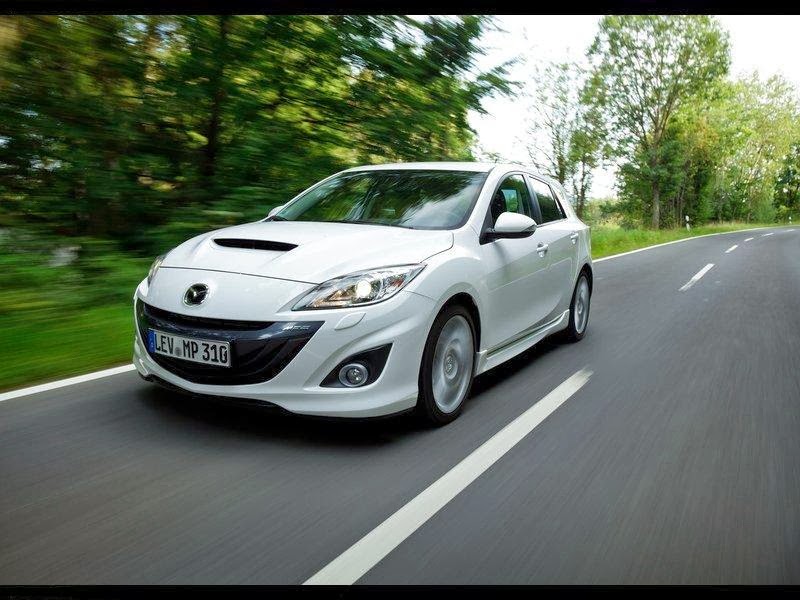
  Mazda 3 MPS model year 2012  From the inside

Monday, November 11, 2013

Mazda 3 model year 2012

0 comments
 From the inside 2012 Mazda 3 model year

The 2012 Mazda 3 made its U.S. debut at the 2011 New York International Auto Show. Face-lifted with an even more refined exterior and interior, the 2012 Mazda 3 also is the first application in North America of Mazda's innovative SKYACTIV fuel-saving and performance-oriented technologies, achieving 40 mpg on the highway. The Mazda 3 model is Mazda's best-selling vehicle worldwide and accounts for nearly half of all Mazda sales in the United States, making the vehicle a prime candidate for introducing SKYACTIV to consumers looking for dynamic performance coupled with high fuel efficiency.

"SKYACTIV is not just an engine; it is the next generation of advanced vehicle performance and efficiency," said Jim O'Sullivan, President and CEO, Mazda North American Operations (MNAO). "SKYACTIV embodies Mazda's philosophy of engineering only vehicles that are fun to drive, satisfying to own and environmentally responsible; and there is no better vehicle to start with than the Mazda 3, one of the most exciting sport compact cars on the road."

Redesigned for the 2010 model year, the refreshed 2012 Mazda 3 is Mazda's first application of SKYACTIV technologies in North America, receiving an all-new SKYACTIV-G gasoline engine as well as the all-new SKYACTIV-Drive six-speed automatic transmission and all-new SKYACTIV-MT six-speed manual transmission. It also features improved sporty driving dynamics, responsive handling and a comfortable cabin space. The exterior design also has been refined to express a bolder stance, alongside new interior appointments creating additional functionality without sacrificing the touch-and-feel quality. Additional safety features complete the package

Mazda 3, SKYACTIV Reach New Heights

In addition to the Mazda 3's current MZR 2.0-liter dual-overhead-cam 16-valve four-cylinder engine is the all-new high-efficiency direct-injection SKYACTIV-G 2.0-liter gasoline engine. Mated to a standard SKYACTIV-MT six-speed manual transmission or optional SKYACTIV-Drive six-speed automatic transmission, SKYACTIV will be available in either the sedan or hatchback models. The MZR 2.0-liter engine will continue to be available with the current five-speed manual as standard equipment. MZR 2.0-liter-equipped models also will be available with the current five-speed automatic as an option.

Approximately 4.4 pounds lighter than the current MZR 2.0-liter engine, the SKYACTIV 2.0-liter adopts multi-hole injectors to enhance fuel spray characteristics, along with specially developed piston cavity shapes that ensure a shorter combustion time and suppresses the impact on power and torque from engine knocking. Pumping loss is also decreased by employing dual sequential valve timing (S-VT).

The 2012 Mazda 3 achieves a high compression ratio of 12.0:1 and delivers 155 horsepower at 6,000 rpm and 148 lb-ft of torque at 4,100 rpm. (The PZEV version of this engine sold in California and other states produces 154 hp at 6,000 rpm and 148 lb-ft of torque at 4,100 rpm).

Compared to the current Mazda 3 MZR 2.0-liter engine, the maximum power of the SKYACTIV-equipped 2012 Mazda 3 is increased by approximately five percent (from 148 horsepower at 6,500 rpm) and torque is increased by approximately 10 percent (from 135 lb-ft at 4,500 rpm). With improved torque, coupled with a drive control system that utilizes coordinated controls of the engine and transmission, Mazda 3s with SKYACTIV technology excel in dynamic response, further maintaining the Zoom-Zoom idea of oneness between the car and driver.

Fuel economy also gets a boost from the combination of a SKYACTIV engine and transmissions. When equipped with the SKYACTIV-G gasoline engine and optional SKYACTIV-Drive six-speed automatic transmission, the 2012 Mazda 3 sedan will achieve an EPA rating of 40 mpg on the highway, an approximately 21-percent improvement over the current MZR 2.0-liter engine equipped with the optional five-speed automatic transmission. With a fuel tank capacity of 14.5 gallons, the 2012 Mazda 3 sedan with SKYACTIV has the potential of a 540-mile range, with still a gallon of fuel remaining. City mpg for the sedan version also improves by 17 percent to 28 mpg. When equipped with the SKYACTIV-MT six-speed manual transmission, the sedan is rated with an estimated fuel economy of 27 city/39 highway.

The Mazda 3 sedan with the MZR 2.0-liter has an EPA fuel economy rating of 25 city/33 highway with the standard five-speed manual transmission and 24 city/33 highway with the optional five-speed automatic transmission.

Also, previously only available with the MZR 2.5-liter engine, the Mazda 3 five-door hatchback model will now be offered in the U.S. with the SKYACTIV-G 2.0-liter gasoline engine. This Mazda 3 hatchback is estimated to deliver 27 city/38 highway (SKYACTIV-MT) and 28 city/38 highway (SKYACTIV-Drive AT). The slightly lower highway estimates can be attributed to different aerodynamics and the higher weight ratio between the sedan and hatchback. However, the hatchback's driving range remains impressive with more than 500 miles of driving on the same sized tank as the sedan. The MZR 2.0-liter engine will not be available in the hatchback model.

The higher fuel economy of the 2012 Mazda 3 equipped with SKYACTIV is a direct result of combining all the best features of the technology in today's transmissions. For SKYACTIV-Drive, the key advantages of a conventional automatic transmission, Continuously Variable Transmission (CVT) and Dual Clutch Transmission (DCT) were integrated. In addition, a torque converter with a lock-up clutch was developed to ensure minimal decrease in fuel economy and an increase in direct drive feel.

For SKYACTIV-MT, the goal was to achieve a shift feel that is sporty, brisk and responds to the driver. To accomplish this, not only was the shift-lever stroke shortened by about 10 percent compared to the current six-speed manual (available only in models equipped with the MZR 2.5-liter engine or MZR 2.3-liter Direct-Injection Spark Ignition turbo engine) but other technologies were applied as well: a down type system, lock ball type synchronizer, shift load canceller, slide ball bearing and locating 2nd and 3rd gears on a common shaft. By reconfiguring the current six-speed manual transmission, its weight was reduced by approximately 4.4 pounds due to the need for fewer components, while creating a quicker and crisper shift feel. Call it a little "MX-5 Miata-ness" in the Mazda 3.

Also available on the 2012 Mazda 3 is the highly-acclaimed Mazda MZR 2.5-liter engine. Alongside the SKYACTIV-G 2.0-liter, the MZR 2.5 is a technology powerhouse as well. It offers an aluminum block with cylinder-bore liners made of a steel-molybdenum alloy offering strength and stiffness generally not seen in large-displacement four-cylinder engines. A forged-steel crankshaft provides strength at high revs, but rigidity to ensure low NVH characteristics. Additionally, twin balance shafts located in the oil sump cancel second-order noise and vibration. The deep-skirt block is engineered for extra stiffness and main-bearing caps are integral with a ladder-type lower-block reinforcement. To minimize the noise and vibration typically found on larger displacement four-cylinder engines, the damper at the forward end of the crankshaft is equipped with two tuned masses. At the output end, a flexible flywheel also curbs NVH.

Fuel is delivered to the intake ports by an electronically controlled sequential injection system. Ignition coils are modular units positioned directly above the spark plugs. Shim-less bucket tappets require no maintenance. Lightweight pistons are coated with a special anti-friction compound and fitted with low-tension rings for improved gas mileage. Sintered powder-metal connecting rods and lighter full-floating wrist pins minimize the reciprocating weight.

Providing 167 hp at 6,000 rpm and 168 lb-ft of torque at 4,000 rpm, the MZR 2.5-liter engine is available with a six-speed manual transmission or a five-speed electronically-controlled automatic with manual shift control. (The PZEV version of this engine sold in California and other states produces 165 hp at 6,000 rpm and 167 lb-ft of torque at 4,000 rpm). The MZR 2.5-liter engine achieves EPA figures of 20 city and 28 highway with a manual transmission and 22 city and 29 highway with the automatic

 From the inside 2012 Mazda 3 model year
2012 Mazda 3 model year
 From the inside 2012 Mazda 3 model year
 From the inside 2012 Mazda 3 model year
 From the inside 2012 Mazda 3 model year .
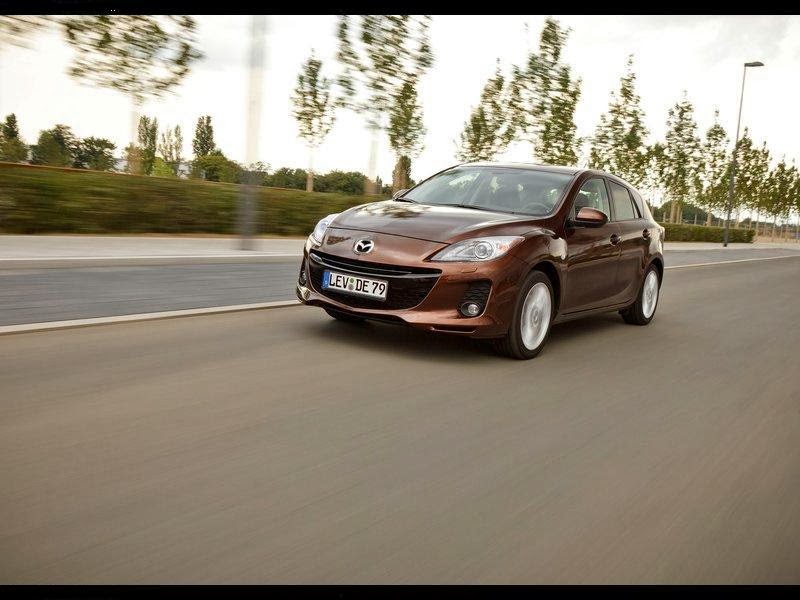
Monday, November 4, 2013

Mazda 5 model year 2013

0 comments
Mazda 5 model year 2013 From the inside
Mazda 5 model year 2013 A perked-up version of the Mazda's revolutionary compact MAV has arrived: The Mazda 5 is now even more stylish, more convenient and safer.

The model that brought dual sliding back doors to the world of compact vans can now be had in three new body colours - Zeal Red, Jet Black and Meteor Grey. On the inside, meanwhile, there is new seat trim along with the dashboard panel décor in a clean, sleek looking piano black finish.

Already one of the world's safest and most driver-oriented vans, the upgraded Mazda 5 has also been given power folding side mirrors with integrated LED turn signals. And to make driving just a little easier, Mazda has added "lane change" turn signals, which are activated by simply tapping the turn signal lever and automatically shut off after blinking three times.

The tire repair kit, meanwhile, makes the Mazda 5 even lighter, which saves fuel. Newly available options include a rear parking camera and auto-dimming rear-view mirror, while a USB port, illuminated glovebox and muffler extension are all standard equipment.

Big inside and compact outside, the Mazda 5 features an award-winning design delivering class-leading aerodynamics for a smooth, quiet ride with extraordinary linear handling and stability. And that with all the practicality and superb comfort one could expect from Europe's most flexible C-MAV.
Mazda 5 model year 2013 From the inside

Mazda 5 model year 2013
Mazda 5 model year 2013 From the inside

Mazda MX-5 model year 2013

0 comments
From the inside Mazda MX-5 model year 2013
The facelifted Mazda MX-5 is more fun to drive than ever. The latest version of the best selling roadster in history not only features more responsive acceleration and braking, but also an aggressive front-end design as well as enhanced pedestrian safety.

Mazda's technology specialists fine-tuned the acceleration management program (on manual shift models) to improve acceleration control and with it the linear response to throttle input, especially at lower speeds. By optimising the vacuum brake booster, meanwhile, they also enhanced brake return control. The upshot here is better handling thanks to superior front-rear load distribution. Drivers will appreciate these advancements most when braking into or accelerating out of curves. The Mazda MX-5, which has always excelled on winding roads, now reacts even more faithfully.

Preventing pedestrian injuries

The facelifted Mazda MX-5 is ahead of the curve in other ways, too. The new active bonnet system automatically raises the hood during an impact with a pedestrian, enlarging the crumple zone to prevent or at least diminish the severity of injuries, particularly to the head. The lower section of the front bumper has also been reinforced to better protect people's legs. The Mazda MX-5 is thus ready for stricter EU pedestrian safety standards.

When adding these safety features, designers also reworked the front-end of Mazda's legendary two-seater. The deeper grille and new bumper design express a lower, wider stance and a more assertive face, while the new fog lamp bezels and chin spoiler improve aerodynamics. Available as a retractable hardtop coupe or classic soft-top convertible, the new MX-5 comes in a choice of eight body colours including one stunning new option: Dolphin Grey. Inside, the glossy dark grey steering wheel spokes and panel décor provide a refined sporty optic.

Powered either by a 126 PS MZR 1.8-litre coupled to a five-speed manual or the 160 PS MZR 2.0-litre with a choice of automatic or manual six-speed transmissions, the facelifted Mazda MX-5 is introduced in Europe, starting in fall 2012

From the inside Mazda MX-5 model year 2013

Mazda MX-5 model year 2013
From the inside Mazda MX-5 model year 2013

Friday, November 1, 2013

Mazda MX-5 Roadster Coupe model year 2013

0 comments

 Mazda MX-5 Roadster Coupe model year 2013 From the inside
 Mazda MX-5 Roadster Coupe model year 2013 The facelifted Mazda MX-5 is more fun to drive than ever. The latest version of the best selling roadster in history not only features more responsive acceleration and braking, but also an aggressive front-end design as well as enhanced pedestrian safety.

Mazda's technology specialists fine-tuned the acceleration management program (on manual shift models) to improve acceleration control and with it the linear response to throttle input, especially at lower speeds. By optimising the vacuum brake booster, meanwhile, they also enhanced brake return control. The upshot here is better handling thanks to superior front-rear load distribution. Drivers will appreciate these advancements most when braking into or accelerating out of curves. The Mazda MX-5, which has always excelled on winding roads, now reacts even more faithfully.

Preventing pedestrian injuries

The facelifted Mazda MX-5 is ahead of the curve in other ways, too. The new active bonnet system automatically raises the hood during an impact with a pedestrian, enlarging the crumple zone to prevent or at least diminish the severity of injuries, particularly to the head. The lower section of the front bumper has also been reinforced to better protect people's legs. The Mazda MX-5 is thus ready for stricter EU pedestrian safety standards.

When adding these safety features, designers also reworked the front-end of Mazda's legendary two-seater. The deeper grille and new bumper design express a lower, wider stance and a more assertive face, while the new fog lamp bezels and chin spoiler improve aerodynamics. Available as a retractable hardtop coupe or classic soft-top convertible, the new MX-5 comes in a choice of eight body colours including one stunning new option: Dolphin Grey. Inside, the glossy dark grey steering wheel spokes and panel décor provide a refined sporty optic.

Powered either by a 126 PS MZR 1.8-litre coupled to a five-speed manual or the 160 PS MZR 2.0-litre with a choice of automatic or manual six-speed transmissions, the facelifted Mazda MX-5 is introduced in Europe, starting in fall 2012

 Mazda MX-5 Roadster Coupe model year 2013 From the inside
 Mazda MX-5 Roadster Coupe model year 2013 From the inside
 Mazda MX-5 Roadster Coupe model year 2013 From the inside

Wednesday, October 30, 2013

Mazda CX-9 model year 2013

0 comments
Mazda CX-9 model year 2013 From the inside
Mazda Motor Corporation will hold the world premiere of the refreshed Mazda CX-9 crossover SUV at the 2012 Australian International Motor Show. The 2013 CX-9 will be launched in Australia in late 2012

Mazda CX-9 is a crossover sport-utility SUV featuring a distinctive sporty appearance, a high-quality cabin, the flexibility of three-rows, and Mazda's exciting "Zoom-Zoom" driving dynamics. The current CX-9 has sold over 210,000 units in 74 countries, including North America and Australia, as Mazda's range-topping SUV.

The 2013 Mazda CX-9 carries over the utility and dynamic driving performance of the current model while adopting Mazda's "KODO - Soul of Motion" design theme at the front and rear for even sportier styling and stronger presence. Enhancements in craftsmanship and interior design further the feeling of quality and refinement. With regard to equipment, the infotainment system features the latest audio, navigation and speech-recognition systems based on the Human Machine Interface  HMI which is intuitive to use. In addition, advanced active-safety features, such as Forward Obstruction Warning System, Lane Departure Warning System, and High Beam Control System, help drivers recognize and avoid danger.

The 2013 CX-9 features the MZI 3.7-liter V6 engine and a six-speed automatic transmission for powerful and refined driving pleasure
Mazda CX-9 model year 2013 From the inside