Showing posts with label Chevrolet. Show all posts

Friday, January 3, 2014

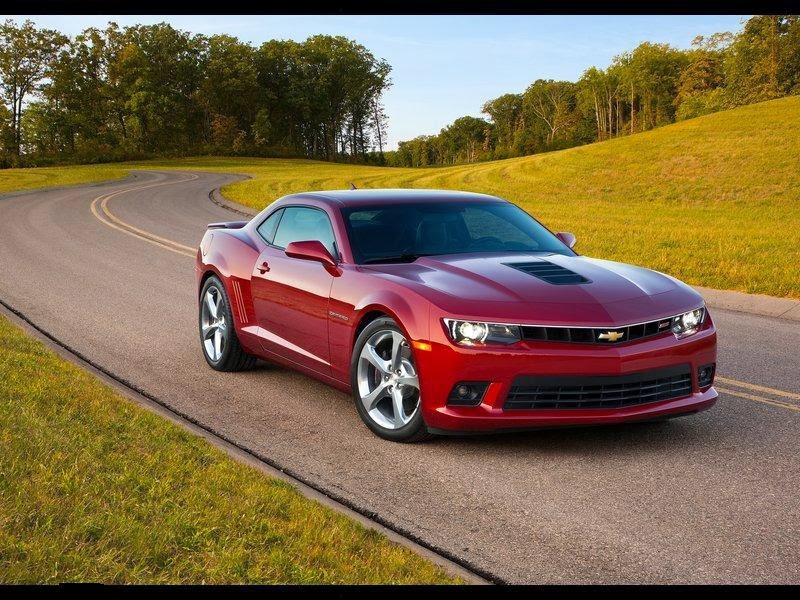
Chevrolet Camaro 1LE model year 2013

0 comments
 Chevrolet -Camaro- 1LE- model year -2013

Chevrolet Camaro 1LE

The road-racing-inspired Chevrolet Camaro 1LE performance package returns for 2013 with unique gearing, suspension tuning and tires that make the model capable of more than 1 g of lateral acceleration and a sub three minute lap time at Virginia International Raceway's Grand Course It is offered on Camaro SS coupes with manual transmissions

The 1LE package is offered on 1SS and 2SS coupe models with an exclusive Tremec TR6060-MM6 six-speed manual transmission Paired with a numerically higher 3.91 final drive ratio the close ratio gearing of the transmission is tuned for road racing performance As with the ZL1 the 1LE transmission features a standard air to liquid cooling system for track use

The Chevrolet Camaro 1LE also features exclusive monotube rear dampers instead of the twin tube dampers on SS models The new hardware allowed engineers to tune the 1LE suspension to focus on optimal body motion control while preserving much of the ride quality and wheel motion control of the Camaro SS

Other changes to optimize the 1LE for track-day use include:

    Larger, 27-mm solid front stabilizer bar, and 28-mm solid rear stabilizer bar for improved body control
    Higher capacity rear axle half shafts to cope with increased levels of traction
    Strut tower brace for improved steering feel and response
    ZL1-based 20 x 10-inch front and 20 x 10-inch aluminum wheels
    285/35ZR20 Goodyear Eagle Supercar G:2 tires front and rear  identical to the front tires for ZL1
    ZL1 wheel bearings toe links and rear shock mounts for improved on track performance
    ZL1 high- fuel pump and additional fuel pickups for improved fuel delivery during high-load cornering

Visually, the 1LE package is distinguished by its matte black hood front splitter and rear spoiler  as well as the 10 spoke ZL1 based wheels which are finished in black The functional front splitter and rear spoiler contribute to the car's on track performance by helping to reduce aerodynamic lift at high speeds

Inside the Chevrolet Camaro 1LE package incorporates the ZL1's flat-bottom steering wheel trimmed in sueded microfiber and designed for easier heel and-toe driving on the racetrack The quick-acting short-throw shifter from the ZL1 is also trimmed in sueded-microfiber

In anticipation of consumers entering the 1LE in amateur-racing events Chevrolet is pursuing SCCA approval of the 1LE package for Touring Class competition

The first Chevrolet Camaro 1LE package was introduced in 1988 inspired by Camaro's involvement in Pro-Am road racing

 Chevrolet -Camaro -1LE -model year- 2013
 Chevrolet Camaro 1LE model year 2013
 Chevrolet -Camaro- 1LE- model year- 2013
 Chevrolet Camaro 1LE model year 2013
 Chevrolet- Camaro- 1LE -model year- 2013
Chevrolet Camaro 1LE model year 2013 From the inside 
Chevrolet -Camaro- 1LE -model year -2013- From the inside

Monday, December 16, 2013

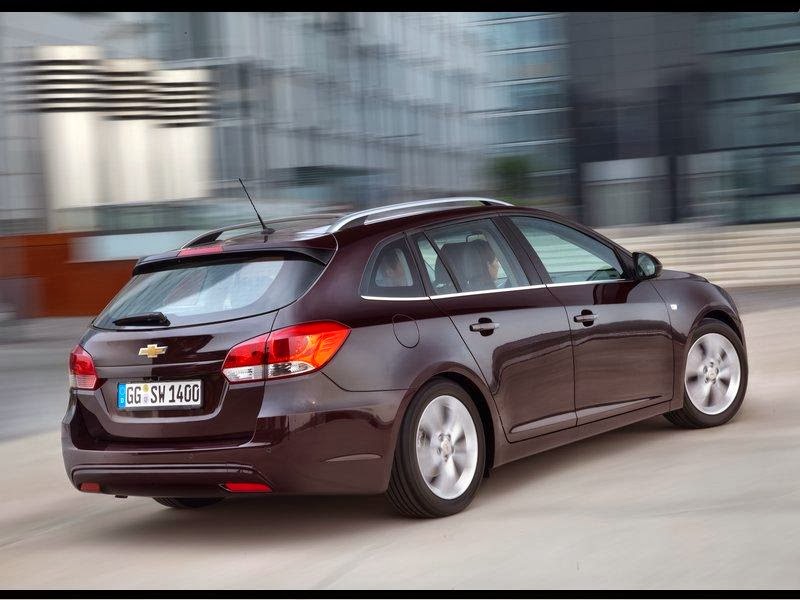
Chevrolet Cruze Station Wagon model year 2013

0 comments
  Chevrolet Cruze Station Wagon model year 2013 from the interior
Chevrolet Cruze Station Wagon 2013 Launched in 2009, the Cruze is the Chevrolet brand's most successful nameplate globally and has sold over 1.3 million units worldwide up to the first quarter of 2012. With the arrival of the much anticipated station wagon variant at dealer showrooms across Europe, Chevrolet will be offering a car that will particularly appeal to families and individuals with an active lifestyle.

"We believe 'Cruze + wagon' is a winning formula for European drivers," said Susan Docherty, President and Managing Director of Chevrolet Europe. "The new Cruze station wagon offers space and versatility, fuel-efficient new engines and Chevrolet's cutting-edge MyLink infotainment technology," Docherty said.

Compact cars represent the largest segment in Europe, accounting for about 17 percent of all vehicles sold, of which station wagons in turn constitute a share of around 22 percent. Buyers of station wagons appreciate the extra amounts of space in their cars yet desire the vehicle's size, performance and overall feel to be comparable to that of a compact hatchback or sedan.

The Chevrolet Cruze station wagon has been designed with these needs and customers' diverse lifestyles in mind. Its particular blend of features make it an ideal family hauler and vehicle for sports excursions or extended holiday trips. The new station wagon is equally suited to the requirements of the suburban commuter who will enjoy the freedom and flexibility the stylish compact car will bring to his life. For outdoor enthusiasts, Chevrolet will be offering a range of useful accessories.

Every bit as sharp as its siblings

The station wagon carries forward the sporty design language embodied by the Chevrolet Cruze sedan and hatchback. Its confident posture is emphasized by a "wheels out, body in" stance, a powerful concave shoulder line and a single arch roofline that tapers off toward the D-pillar. The slim roof rails are a standard feature and contribute to the vehicle's poised looks.

A dual-port grille, with the golden bowtie positioned in the center, instantly communicates the station wagon as a Chevrolet. Among the design changes incorporated into all model year 2013 Cruzes are an angular drawn fascia with horizontal slats. The enhanced front bumper with fog lights that are accommodated in newly styled housings accentuates the car's sporty looks.

The interior features fluid lines and Chevrolet's signature dual cockpit, with wrap-around front fascia which flow into the driver and passenger door. Cars that come with the brand-new Chevrolet MyLink infotainment system will boast a new seven-inch high resolution touch screen located in the integrated center stack.

Also, in cars equipped with MyLink or the new base and mid-level radios to be launched on model year 2013 Cruzes (left-hand-drive markets), the layout of the instrument panel and HVAC outlets next to the radio unit has been re-designed. The small compartment in the upper instrument panel has been moved closer to the radio unit and now also houses USB and aux-in sockets.

Vehicles equipped with Start/Stop will feature an instrument cluster display with an eco-drive assistance menu. Thanks to Passive Entry, Passive Start (PEPS), a new option on the Cruze, drivers will be able to keep the car key conveniently in their pocket when unlocking, locking and starting their vehicle.

Infotainment offers new levels of connectivity

As of this summer, Chevrolet MyLink, a brand-new and sophisticated infotainment system, will become available in the Chevrolet Cruze. It brings smartphone capabilities into the vehicle.

Chevrolet MyLink aggregates content from a smartphone onto the seven-inch, high resolution, full color touch-screen display. Connectivity will be ensured via USB or Bluetooth for mass storage devices, including MP3 players, iPod, iPad, etc. There is also a dedicated plug-in outlet for certain personal music devices and smartphones that do not use USB or Bluetooth connections.

MyLink enables:

    the caller to choose a name from the stored directory, touch the call function and project the call through the vehicle speakers, thereby obviating the cumbersome process of having to manually dial a number
    easy access to personal playlists, photo galleries, phone books, other stored media and data
    playback of videos and personalized slide shows when the car is stationary
    customers to download special apps such as navigation which will be offered for download later in the year

Manufactured by LG electronics, the seven-inch color touch screen has a clean intuitive design with five menus, each of them comprising a list of easy-to-select functions. The MyLink radio unit can be operated through steering wheel controls used for digital audio broadcasting (DAB). Six speakers will provide excellent sound quality for all occupants.

A rearview camera will be standard in cars with MyLink as well as in vehicles whose infotainment package features the proven integrated navigation device. This package also includes Bluetooth technology for streaming and hands-free connectivity, aux-in and USB jacks, steering wheel controls, CD player and six premium speakers.

Spacious trunk and practical interior layout

Space is abundant in the Chevrolet Cruze station wagon, both for the occupants and the cargo they wish to transport. The carpeted trunk measures 1,024 mm in length in its basic configuration and allows for storage of up to 500 liters up to the window line. When the rear seatbacks (60/40 split) are folded flat, some 1,478 liters of cargo be packed under the roof of the car.

Further trunk highlights include:

    a luggage compartment cover that retracts fully into a cassette. The fully expanded cover can be moved up and out of the way for better access into the trunk
    a storage tray with three storage compartments between the rear seatbacks and the cassette for the luggage cover
    a separate small load space below the rearmost section of the cargo deck which holds the standard tire repair kit
    two extra storage compartments, located behind the wheel arches
    several ears on the sides of the cargo deck for tying down bulky cargo

Smaller stowage spaces inside the car include door pockets with integrated bottle storage (1.5 liters front, 0.5 liters rear), a large illuminated two-tier glovebox, seat-back pockets sufficiently large to carry slim laptops, and a compartment for stowage of smaller items in the instrument panel.

Available accessories may include cargo nets, a cargo organizer box with flexible partition walls, a roof box, as well as bicycle, ski and surf board carrier systems.

Enhanced engine line-up: more punch at each stroke

Under the hood, a 1.4L turbocharged gasoline engine and a 1.7L diesel engine will complement the powertrain line-up, in addition to the 1.6L and 1.8L gasoline and 2.0L diesel engines already on offer.

The 1.4L turbocharged gasoline engine delivers a performance comparable to engines of a larger displacement while requiring less fuel and producing a smaller carbon footprint. Matched to a standard six-speed manual transmission, it develops 140 hp (103 kW) and a maximum torque of 200 Nm at 1,850~4,900 rpm while 0-100 km/h acceleration requires 9.5 seconds. On a combined cycle, the 1.4L turbo gasoline engine consumes 5.7 liters/100 km, which corresponds to 134 g of CO2 per km.

The 1.7L diesel engine, equipped with an intercooled turbocharger, standard Start/Stop and electric power steering, cranks out 130 hp (96 kW) that propel the station wagon to 100 km/h in 10.4 seconds, and to a top speed of 200 km/h. This solid performance is matched by impressive peak torque ratings of 300 Nm at 2,000~2,500 rpm.

With a fuel consumption of 4.5 liters per 100 kilometers on a combined cycle and 119 g of CO2 emissions per kilometer, the 1.7L diesel unit is the most frugal ever to have powered a Chevrolet Cruze.

On the Chevrolet Cruze station wagon, the 1.6L gasoline engine variant will incorporate standard electric power steering (EPS), which helps reduce the fuel consumption and CO2 emissions of this unit. In a number of European markets, EPS as well as Start/Stop will also be incorporated on the 2.0L diesel engines as of this summer.

The 1.4L turbo gasoline, the 1.7L and the 2.0L diesel engines will come with a six-speed manual gearbox whereas the 1.6L and 1.8L gasoline engines will be mated to five-speed transmissions. Both the 1.8L gasoline and the 2.0L diesel engine will also be offered with an automatic transmission.

Proven architecture puts safety first

Chassis and suspension engineers have made sure that the station wagon's dynamics match the vehicle's nimble looks. The experience gained on the race track in the World Touring Car Championship (WTCC), which the Cruze has won for two years in a row, in 2010 and 2011, has been put to good use in the further development of the road car.

The Chevrolet Cruze station wagon shares the same planted, confident stance as the sedan and the hatchback, as well as the highly rigid unibody structure, more than 60 percent of which is made of high-strength steels. Proven McPherson strut front and compound crank type rear suspension designs have been specifically tuned for the car's mission and contribute to the vehicle's low center of gravity, balance of ride and responsive handling.

Steering is electrically power-assisted on the 1.4L turbo and 1.6L gasoline, the 1.7L diesel and the 2.0L diesel engine with Start/Stop, providing the driver with a solid on-center feel. Customers who order a navigation or Chevrolet MyLink infotainment system will be able to use a rearview camera, a novelty on the Cruze which is rather uncommon in the segment. Cruise control is also available, depending on the trim level.

The safety architecture of the Chevrolet Cruze station wagon is nearly identical to that designed for the sedan, a compact car that has earned top five-star safety ratings from both EuroNCAP and the U.S. National Highway Traffic Safety Administration (NHTSA).

In addition to the vehicle's sophisticated body structure, six standard airbags, Eletronic Stability Control, Traction Control, as well as four-channel anti-lock brakes contribute to its excellent safety performance. Five three-point seatbelts, ISOFIX anchoring system on the two rear outboard positions and a collapsible pedal assembly are also standard.

Head-turning good looks

The Chevrolet Cruze station wagon carries forward the sporty design language embodied by its siblings, the Cruze sedan and hatchback, but has its stand-alone identity. Its proportions, and dynamic styling give Chevrolet's newest entry to Europe a strong presence.

"The station wagon is the latest variant to join the Cruze family and yet, its flowing, harmonious body lines and consistent design illustrate that the nameplate was conceived with this important model in mind from the very outset," said Taewan Kim, Vice President Design, GM Korea. "We were inspired to give the car a fast and distinctive appearance without compromising on spaciousness, versatility and practicality in any way."

From the B-pillars rearward, the bodywork is all new. The station wagon's confident posture is emphasized by a "wheels out, body in" stance, a powerful concave shoulder line and a single arch roofline that tapers off toward the D-pillar. The slim roof rails are a standard feature and contribute to the vehicle's poised looks.

A dual-port grille, with the golden bowtie positioned in the center, instantly communicates the station wagon as a Chevrolet. Among the design changes incorporated into all model year 2013 Cruzes are an angular drawn fascia with horizontal slats which will replace the honeycomb previously used in the grille. An enhanced front bumper with fog lights that are accommodated in newly styled housings give the car a sharper, sportier appearance.

At the rear end, the raked angle of the tailgate consolidates the dynamic profile that is so manifest in the swept frontal section. All model year 2013 Cruzes will sport a fresh five-spoke wheel design. Depending on the trim level, steel or alloy wheels are 16 or 17 inches in size. The station wagon is also offered with stylish black-painted wheels.

Stylish and comfortable interior

The all-new Chevrolet Cruze station wagon offers a modern passenger cabin that is progressively styled and has the degree of flexibility to meet the demands and active lifestyles of modern families and individuals alike.

The interior features Chevrolet's signature dual cockpit, with wrap-around front fascia that flow into the driver and passenger door. Mid and up-level trims will boast a seven-inch high resolution touch screen located in the integrated center stack.

The mid-instrument panel is colored to match the seat inserts and door trims. A new interior color, Brownstone, will be introduced on mid and up-level specifications.

In cars that come with the brand-new Chevrolet MyLink infotainment system, or with the new base and mid-level radios, the layout of the instrument panel and center console has been re-designed. The storage compartment in the upper instrument panel is flanked by tall and sleek HVAC outlets. It has been moved forward, closer to the radio unit, and now houses USB and aux-in sockets.

Those connectivity features remain in the storage compartment located under the center console armrest in vehicles featuring the current integrated navigation system available in both left and right-hand-drive markets. In front of the driver, the instrument cluster is efficiently packaged, featuring Chevrolet's trademark ice-blue backlighting. A centrally located digital readout highlights average speed, selected gear in automatic transmissions and fuel range as well instantaneous and average fuel economy.

Vehicles equipped with Start/Stop technology will sport a cluster display with a eco drive assistance menu. It highlights an intuitive selection of data related to the ecological aspects of driving, in particular fuel efficiency.

Thanks to Passive Entry, Passive Start (PEPS), another up-market feature that is new in the Cruze, entering into and disembarking from the station wagon becomes a truly effortless affair. The system allows drivers to keep the car key in their pocket when unlocking, locking and while starting their vehicle with a push-button.

Customers can choose from two kinds of seat fabric or opt for heated leather seats, for a maximum of comfort. Depending on the trim level, air conditioning systems will be either manual or automatic and incorporate a filter that reduces the inflow of particulates and pollutants which may cause asthma and other respiratory conditions.

New convenience in infotainment

As of this summer, a brand-new cutting-edge infotainment technology available on the Cruze is set to inspire customers in many ways. Chevrolet MyLink will set new standards in terms of convenience and flexibility by bringing smartphone capabilities into the vehicle.

Chevrolet MyLink aggregates content from the smartphone onto the seven-inch, high resolution, full color touch-screen display. Connectivity will be ensured via USB or Bluetooth for mass storage devices, including MP3 players, iPod, iPad, etc. There is also a dedicated plug-in outlet for certain personal music devices and smartphones that do not use USB or Bluetooth connections.

With Chevrolet MyLink, the smartphone, functions very much in the same fashion a hard drive would in an embedded infotainment system. Owners of compatible devices can bring their own media into the vehicle through USB or by pairing the smartphone using the system's Bluetooth connection.

Phone calls can be made without dialing, as the caller can select a name from the stored directory, touch the call function and project the call through the vehicle speakers. Personal playlists, photo galleries, phone books, other stored media and data can also be accessed easily. As long as the car remains stationary, occupants may also watch videos or personalized slide shows. A selection of special apps, such as navigation, will be offered for download later in the year.

The seven-inch color touch screen is manufactured by LG electronics and has a clean, intuitive design with five menus (Audio, Pictures & Movies, Telephone, Smartphone Link and Settings), each of them comprising a list of easy-to-select functions. The MyLink radio unit has been engineered to enable digital audio broadcasting (DAB) and can be operated through steering-wheel controls. It will be wired to six speakers.

A rearview camera will be standard in cars with MyLink as well as in vehicles whose infotainment package features the proven integrated navigation device. This package also includes Bluetooth technology for streaming and hands-free connectivity, aux-in and USB jacks, steering wheel controls, CD player and six premium speakers.

The more upscale unit of the two other radio systems to be offered will consist of a standard CD player and six speakers, Bluetooth and hands-free functionality as well as steering wheel controls. The device is DAB-capable and will feature USB and aux-in connectivity.

Spacious trunk, numerous storage opportunities for smaller items

Space is abundant in the Chevrolet Cruze station wagon, both for the occupants and the cargo they wish to transport. Head room is 999 mm (rear seats: 988 mm) while front and rear leg room is 1,074/917 mm and shoulder room 1,391/1,370 mm.

The carpeted trunk measures 1,024 mm in length in its basic configuration and allows for storage of items of up to 500 liters in volume up to window line. When the rear seatbacks are folded flat (60/40 split), the enlarged luggage compartment can hold some 1,478 liters of cargo up to the roof. The maximum payload is approximately 530 kg, depending on the engine variant.

A number of ears attached to the sides of the cargo deck enable customers to tie down larger goods they do not want to slosh about while the car is moving.

The luggage compartment cover retracts fully into a cassette if bulkier cargo needs to be accommodated. The cassette itself can be removed, if necessary. Fetching smaller items out of the trunk is easy, too, as the cover can be conveniently moved upward and out of the way. Just behind the luggage compartment cover lies a storage tray with three storage compartments. Below the rearmost section of the cargo deck, a separate small load space holds the standard tire repair kit.

Smaller stowage spaces inside the car include door pockets with integrated bottle storage (1.5 liters front, 0.5 liters rear), a large and illuminated two-tier glovebox, seat-back pockets sufficiently large to carry slim laptops, and a compartment for stowage of smaller items in the instrument panel. The large center console has an adjustable dual cupholder.

The Chevrolet Cruze station wagon has standard roof rails and a roof load capacity of 100 kg. Bicycles can be carried externally by attaching them to the roof rails by means of a lockable system. Alternatively, they may be mounted onto a carrier that is attached to the trailer hitch. Other accessories such as cargo nets that keep small items from moving around in the cargo area, a cargo organizer box with flexible partition walls, a roof box, as well as ski carriers and a surf board carrier are also available.

New fuel-efficient engines deliver a lot of punch

The Chevrolet Cruze station wagon will be offered with a new 1.4L turbocharged gasoline engine that will complement the carline's proven powertrain line-up. This engine delivers a performance comparable to units of a larger displacement while requiring less fuel and producing a smaller carbon footprint.

Featuring standard Start/Stop, the four-cylinder unit has a dual overhead camshaft with variable valve timing and a multi-point injection fuel system.

Coupled to a standard six-speed manual transmission, the 1.4L turbo gasoline engine develops a maximum power output of 140 hp (103 kW) , enabling the station wagon to hit 100 km/h in 9.5 seconds. When it comes to maximum torque, which is rated at 200 Nm at 1,850~4,900 rpm, the 1.4L turbo gasoline engine will, by a considerable margin, be the most potent of the three gasoline engines.

At the same time, its efficiency makes the 1.4L turbocharged gasoline a compelling choice for environmentally and financially conscious drivers. On a combined cycle, the 1.4L turbo gasoline engines consumes 5.7 liters/100 km which result in 134 g of CO2/km.

1.7L diesel - the Cruze's most frugal powerplant

The much anticipated 1.7L diesel engine is equipped with an intercooled turbocharger and boasts an intake manifold with integrated swirl flaps. Diesel fuel is supplied through a common-rail injection fuel system which enables up to 18 injections per cycle at a pressure of 1,800 bar.

At full throttle, the engine cranks out a maximum of 130 hp (96 kW) that propel the vehicle to 100 km/h in 10.4 seconds, and to a top speed of 200 km/h. This solid performance is matched by torque ratings of 300 Nm at 2,000~2,500 rpm.

More crucial still, the 1.7L diesel unit is the most frugal powerplant ever to have been mounted into a Chevrolet Cruze. Fuel consumption is 4.5 liters per 100 kilometers on a combined cycle, which translates into 119 g of CO2 emissions per kilometer.

Start/Stop technology as well as electric power steering (EPS) are standard on the 1.7L and will also be featured on 2.0L diesel engines in several European markets. The upgraded 163 hp (120 kw) 2.0L diesel unit will need 4.8 liters per 100 kilometers and emit 126 g of CO2 per kilometer.

On the Chevrolet Cruze station wagon, the 1.6L gasoline engine will be sold with standard electric power steering in all markets, which helps reduce fuel consumption to 6.4 liters on a combined cycle of 100 kilometers, and CO2 emissions to 151 g/km.

The 1.4L turbo gasoline, the 1.7L and the 2.0L diesel engine will come with a six-speed manual gearbox whereas the 1.6L and 1.8L gasoline engines will be mated to five-speed transmissions. Both the 1.8L gasoline and the 2.0L diesel engine will also be offered with an automatic transmission of six speeds.

Race-track-inspired, responsive handling

Chassis and suspension engineers have seen to it that the station wagon's ride and handling characteristics are in tune with the car's nimble appearance. Cruze has won the World Touring Car Championship (WTCC) for two years in a row, in 2010 and 2011, and the experience gained on the race track has been put to good use in the further development of the passenger car.

The Chevrolet Cruze station wagon shares the same planted, confident stance as the sedan and the hatchback. It also features a very rigid unibody structure more than 60 percent of which is made of high-strength steels, with the upper body and the car's frame engineered as a single unit.

Proven McPherson strut front and compound crank type rear suspension designs have been specifically tuned to meet the requirements of a modern and versatile station wagon and contribute to the vehicle's low center of gravity, ensure balance of ride and agile handling.

Steering is electrically power-assisted on variants with the 1.4L turbo gasoline and the 1.6L gasoline, 1.7L diesel and the 2.0L diesel engine with Start/Stop, providing the driver with a solid on-center feel. Less than three turns of the steering wheel are required lock-to-lock, giving the Cruze station wagon a turning diameter of 10.9 m curb-to-curb. Available rear parking sensors and cruise control further enhance driving comfort.

A key enabler to the quiet running of the Chevrolet Cruze station wagon is the isolation of its sub-frame by means of four rubber mountings. Other measures to control noise and vibrations include:

    the comprehensive insulation of the entire car body with an array of sealants
    the use of damping patches that were melted at interfaces between small body sections
    molding special nylon baffle packs in strategic locations
    shielding the front bulkhead panel with two damping mats
    attaching a pre-formed fiberglass sheet to the underside of the hood
    a three-layer acoustic headliner with two-layer polyurethane outer skin
    a fiberglass blanket in the doors as a barrier against noise, airflow and water

Proven safety architecture

The safety architecture of the Chevrolet Cruze station wagon is nearly identical to that designed for the sedan, a compact car that has earned top five-star safety ratings from both EuroNCAP and the U.S. National Highway Traffic Safety Administration (NHTSA).

Ideally, a driver can avoid an accident from occurring in the first place. To this end, the Chevrolet Cruze station wagon features a host of advanced active safety systems which include:

    Electronic Stability Control (ESC): ESC helps the driver maintain control in challenging driving situations and keeps the vehicle heading in the intended direction. It also enables more precise, controlled anti-lock braking performance as well as exceptional traction and steering stability.
    Traction Control which limits wheel spin when one or both of the front drive wheels begin to lose traction
    four-channel Anti-Lock Brakes with Electronic Brake Force Distribution (EBD). The latter proportions brake pressure during braking.

Customers whose car will be fitted with the Chevrolet MyLink infotainment or the integrated navigation systems will be able to use a standard rear view camera, a feature still rather uncommon in this segment.

If an accident does happen, six standard airbags are ready to be deployed by the sensing diagnostic module. The station wagon's rigid body structure, welded tubular section members in the doors, door beams made of ultra-high strength steels, and strong cross suspension members at the rear provide excellent all-round protection.

The front and rear crush zones, meanwhile, have been engineered to collapse in a controlled fashion, so as to maintain the integrity of the passenger cabin. A collapsible pedal assembly reduces the risk of injuries to the driver's legs and feet during moderate-to-severe impacts.

All Chevrolet Cruze station wagons are equipped with five three-point seatbelts and six standard airbags. Safety seats for children can be secured using the ISOFIX anchoring system on the two rear outboard positions
 2013 Chevrolet Cruze Station Wagon model year from the interior
 Chevrolet Cruze Station Wagon model year 2013
 2013 Chevrolet Cruze Station Wagon model year from the interior
 Chevrolet Cruze Station Wagon model year 2013
 2013 Chevrolet Cruze Station Wagon model year from the interior
 Chevrolet Cruze Station Wagon model year 2013
 2013 Chevrolet Cruze Station Wagon model year from the interior
 Chevrolet Cruze Station Wagon model year 2013
 2013 Chevrolet Cruze Station Wagon model year from the interior
 2013 Chevrolet Cruze Station Wagon model year from the interior
 2013 Chevrolet Cruze Station Wagon model year from the interior
.

Saturday, December 7, 2013

Chevrolet Corvette 427 Convertible model year 2013

0 comments
 from the interior Chevrolet Corvette 427 Convertible model year 2013

 Chevrolet Corvette 427 Convertible model year 2013 Chevrolet unveiled the 2013 Chevrolet Corvette 427 Convertible Collector Edition  the fastest most capable convertible in Corvette's history  as well as a 60th Anniversary Package that will be available on all 2013 Corvette models

 The 2013 model year will be historic for Corvette marking its 60th Anniversary and the final year for the current  C6 generation said Chris Perry vice president, Global Marketing and Strategy for Chevrolet We couldn't think of a more fitting way to celebrate these milestones than bringing back one of the most coveted combinations in the brand's history  the Corvette convertible and a 427 cubic inch engine

Chevrolet Corvette 427 Convertible Collector Edition

The Chevrolet Corvette 427 Convertible blends elements of the Z06 and ZR1 models to create the fastest and most capable convertible in Corvette's history

Its heart is the 427-cubic-inch  7.0L LS7 engine from the Corvette Z06 Rated at 505 horsepower  377 kW and 470 lb.-ft. of torque  637 Nm it is the most powerful engine ever installed in a production Corvette convertible - and, like the Z06, the 427 Convertible is only available with a six-speed manual transmission

The LS7 was co-developed with the Corvette Le Mans-winning GT1 engine and features lightweight titanium connecting rods and intake valves as well as racing inspired high-flow cylinder heads and a dry-sump oiling system. It is assembled by hand at GM's Performance Build Center where customers who purchase the 427 Convertible Collector Edition can purchase the Corvette Build Experience option and assemble the engine that will power their new car

Supporting performance elements in the Chevrolet Corvette 427 Convertible include the driveline and rear axle system from the Corvette Z06 a rear-mounted battery and standard Magnetic Selective Ride Control The standard 19 inch front and 20-inch rear wheels are wrapped in ZR1 style Michelin PS2 tires. Lightweight machine face Cup wheels  introduced on the 2012 Corvette Z06 with Z07 and Corvette ZR1 with PDE performance packages  come standard and include unique gray painted pockets  Black Cup wheels or chrome ZR1 style wheels are also available

The 427 Convertible also features several carbon-fiber components that help reduce weight including

    Carbon fiber raised hood (introduced on the 2011 Z06 Carbon Edition
    Carbon fiber Z06 style fenders
    Carbon fiber floor panels
    The  CFZ carbon fiber front splitter and rocker panels are optional on the 427 Convertible and included with the 60th Anniversary package

The weight reduction brings the 427 Convertible's curb weight to 3,355 pounds  1,522 kg Combined with its 505 horsepower LS7 engine it gives the 427 Convertible a power to-weight ratio of 6.64  or one horsepower for every 6.64 pounds of vehicle mass  That's better than

    Porsche 911 Turbo S Cabriolet  6.90
    Audi R8 5.2 FSI Spyder  7.58
    Aston Martin DBS Volante Convertible  7.82
    Ferrari California Convertible  8.31

The combination of low mass and high output will make the 427 Convertible one of the fastest convertibles in the world, delivering estimated 0-60 performance of 3.8 seconds quarter mile performance of 11.8 seconds lateral acceleration of 1.04 g and a top speed of more than 190 mph

The 427 Convertible is available in 2LT, 3LT and 4LT trim levels and will carry a unique vehicle identification number sequence similar to the Corvette ZR1

Corvette 60th Anniversary Package

All 2013 Corvette models, including the 427 Convertible, will be available with a 60th Anniversary Package, featuring an Arctic White exterior with a Blue Diamond leather wrapped interior with suede accents Convertible models will have a blue top

Additional content includes a ZR1 style rear spoiler special badging gray-painted brake calipers and the  60th logo on the wheel center caps, steering wheel and seat headrests An optional graphics package adds full length racing stripes in Pearl Silver Blue including a tonal stripe stitched into the convertible top extending the graphic theme over the roof

For 2013 all Corvettes will feature 60th Anniversary badges on the fascias and the  waterfall panel on convertible models, as well as 60th logos in the instrument panel gauge cluster and on the sill plates

Charity Auction at Barrett Jackson Scottsdale

The first Chevrolet Corvette 427 Convertible offered to the public will go to the highest bidder at the Barrett Jackson Scottsdale collector car auction, on Saturday, Jan. 21, 2012 Proceeds from the sale will benefit the Drive to End Hunger food relief program

Chevrolet and Hendrick Motorsports are teaming up for the auction including Hendrick team driver and four-time NASCAR Sprint Cup Champion Jeff Gordon Team owner Rick Hendrick helped launch the Drive to End Hunger program with AARP and the AARP Foundation

The Drive to End Hunger is part of a multi-year sponsorship for Gordon's No. 24 Chevrolet. It calls on racing fans corporations and charitable organizations to raise money, build awareness and engage Americans who face the threat of hunger.

A legacy of 427 powered Corvettes

Early 427 powered Corvettes, particularly convertibles offered from 1966 to 1969 are some of the most-coveted and collectable Corvettes ever produced

The first 427 powered Corvette rolled off the assembly line for the 1966 model year  Two performance levels of the 427 were initially offered  an  L30 version rated at 390 horsepower and the  L72 which cranked out 425 horsepower. Both were rated at 460 lb-ft. of torque.

The range of 427 engines grew in 1967 with the addition of the  L71 and  L88  options  The L71 added a unique triple carburetor induction system that helped boost output to 435 horsepower. Known to collectors as  427/435 cars, these  67 models   especially the convertibles  are especially sought after collector cars

The  L88 delivered 430 horsepower  with a single four barrel carburetor thanks to racing tuned aluminum heads Intended for customers who would immediately transform their new Corvette into a race car the L88 was installed in just 216 production Corvettes between 1967 and 1969

In 1969, a special  L89 427 engine combined the L71's induction system with the L88's aluminum heads offering maximum horsepower with an approximately 100-pound weight advantage over the standard iron heads Also in 1969 Chevrolet built two  ZL1  427 Corvette coupes The ZL1 engine was essentially an all aluminum version of the L88 with the aluminum cylinder block and heads offering a tremendous weight advantage for racing. More of the engines were sold as crate engines to racers

By 1970 the big-block engine grew to 454 cubic inches just as the trend in high-compression high-performance engines was beginning to wane The four year run of 427 Corvettes was already established as the golden era of performance

Commemorative Collector Edition and Anniversary Edition models

Rare and low production examples of the Corvette have been around since its 1953 introduction, but Chevrolet didn't begin building commemorative models until 1978  when the 25th Anniversary model  also known as the Silver Anniversary Corvette   was offered The Corvette was in its third generation then and at the close of that epoch in 1982 a Collectors Edition was offered as well

Those special models launched what has become a tradition for the Chevrolet Corvette which has offered milestone anniversary and generational collector edition models ever since The 2013 Corvette 427 Convertible represents the first time a Collector Edition and Anniversary Edition are being offered in the same year  and available on the same car


 from the interior Chevrolet Corvette 427 Convertible model year 2013
  Chevrolet Corvette 427 Convertible model year 2013
 from the interior Chevrolet Corvette 427 Convertible model year 2013
 from the interior Chevrolet Corvette 427 Convertible model year 2013
 from the interior Chevrolet Corvette 427 Convertible model year 2013

Monday, December 2, 2013

Chevrolet Camaro ZL1 Convertible model year 2013

0 comments
 from the inside Chevrolet Camaro ZL1 Convertible model year 2013
 Chevrolet Camaro ZL1 Convertible model year 2013 Chevrolet's most powerful convertible ever  the 2013 Chevrolet Camaro ZL1 Convertible   made its debut at the 2011 Los Angeles Auto Show When it goes on sale in late 2012 it will deliver more performance and technology than many exotic cars and ultra-luxury convertibles

 The 2013 Chevrolet Camaro ZL1 Convertible will be one of the most powerful and most capable convertibles available at any price said Al Oppenheiser Camaro chief engineer  This is a car that is guaranteed to put a smile on your face every time you drop the top  or hit the gas

Like the coupe the 2013 Chevrolet Camaro ZL1 Convertible features a supercharged 6.2L  LSA engine SAE-rated at 580 horsepower  432 kW and 556 lb ft of torque  754 Nm That's enough to exceed the output of 2+2 convertibles of many performance icons including

    2012 Aston Martin DB9 Volante  470 hp / 443 lb.-ft
    2012 Mercedes SL63 AMG  518 hp / 465 lb.-ft
    2011 Porsche 911 Turbo S  530 hp / 516 lb.-ft
    2011 Ford Shelby GT500  550 hp / 510 lb.-ft

The Chevrolet Camaro ZL1 Convertible's power is complemented by advanced powertrain and chassis technologies designed to deliver exceptional performance on the road or track. In fact  it's the same balance of acceleration, handling and ride quality that enabled a Camaro ZL1 coupe recently to lap the Nürburgring's Nordschleife course in 7:41.27 minutes

From Day One the architecture for the fifth generation Camaro was designed to accommodate a convertible model which gives the ZL1 convertible coupe-like driving dynamics Four strategic reinforcements enhance the already-stiff body structure to quell the cowl and steering wheel shake common in convertibles They include

    A tower-to-tower brace under the hood
    A transmission support reinforcement brace
    Underbody tunnel brace
    Front  X brace and stiffer cradle as well as rear underbody  V braces

Additional structural reinforcements in the ZL1 convertible are designed to improve noise and vibration characteristics while also reducing unwanted ride and body motions They include a hydrofoamed tube in the A pillars an inner reinforcement bracket in the windshield header a reinforced front hinge pillar and reinforcements inside the rockers

The suspension of the ZL1 convertible uses the third-generation of Magnetic Ride. New  twin-wire/dual-coil dampers at all four corners enable faster response with damping levels now adjusted up to 1,000 times per second  about one adjustment per inch of vehicle travel at 60 mph  making the system exceptionally responsive to changing driving and road conditions.

The 2013 Chevy Camaro ZL1 Convertible will also offer Performance Traction Management as standard equipment which is exclusive to General Motors. First introduced on the Corvette ZR1 it is an advanced system that integrates magnetic ride control launch control traction control and electronic stability control to enhance both launch acceleration performance and corning

The result is a convertible designed to preserve nearly all the acceleration road holding and performance capabilities of the Camaro ZL1 coupe which goes on sale in early 2012
 from the inside Chevrolet Camaro ZL1 Convertible model year 2013
  Chevrolet Camaro ZL1 Convertible model year 2013
 from the inside Chevrolet Camaro ZL1 Convertible model year 2013
  Chevrolet Camaro ZL1 Convertible model year 2013
 from the inside Chevrolet Camaro ZL1 Convertible model year 2013
 Chevrolet Camaro ZL1 Convertible model year 2013
 from the inside Chevrolet Camaro ZL1 Convertible model year 2013

Sunday, November 24, 2013

Chevrolet Corvette Stingray Indy 500 Pace Car model year 2014

0 comments
from the inside Chevrolet Corvette Stingray Indy 500 Pace Car model year 2014
Chevrolet Corvette Stingray Indy 500 Pace Car model year 2014 The all-new, seventh-generation 2014 Corvette Stingray will serve as the Indianapolis 500 Pace Car leading the field to green at the start of the 97th running of The Greatest Spectacle in Racing on Sunday, May 26, 2013, at Indianapolis Motor Speedway

It marks a record 12th time the Corvette has served as the Pace Car, starting in 1978

It is an honor to help inaugurate the all-new Corvette Stingray at the hallowed Brickyard and further the legacy between Chevrolet and the Indianapolis 500 said Jim Campbell, GM vice president of Performance Vehicles and Motorsports The 2014 Corvette Stingray's performance was influenced by racing, making this prestigious assignment even more fitting

Along with Chevrolet's return in 2012 as an engine supplier, the Corvette Stingray Pace Car extends a legacy at the Brickyard that dates to the racetrack's early days.

"Chevrolet is a great partner of the Speedway," said Jeff Belskus, Indianapolis Motor Speedway Corporation president and chief executive officer. "That connection is heightened this year with the next-generation Corvette in front of a very talented field of racers."

Decked out in Laguna Blue Tintcoat with official Indianapolis 500 graphics on the doors, the Corvette Stingray Pace Car differs from production models with only track-mandated safety features and strobe lights. No powertrain upgrades are required to run in front of the IndyCar pack, thanks to its all-new 6.2L LT1 engine, which features advanced technologies including direct fuel injection, continuously variable valve timing and Active Fuel Management (cylinder deactivation). They help produce an estimated 450 horsepower more efficiently.

The 2014 Corvette Stingray coupe goes on sale in fall 2013, with a convertible model - featuring a fully electronic top that can be operated remotely with the key fob - coming a few months later. Vehicle highlights include:

An interior that offers genuine carbon fiber and aluminum trim, hand-wrapped leather materials, dual eight-inch configurable driver/infotainment screens, and two new seat choices - each featuring a lightweight magnesium frame for exceptional support
Advanced driver technologies, including a five-position Drive Mode Selector that tailors 12 vehicle attributes to fit the driver's environment and a new seven-speed manual transmission with Active Rev Matching that anticipates gear selections and matches engine speed for perfect shifts every time
Lightweight materials, including a carbon fiber hood and removable carbon fiber roof panel on coupes; composite fenders, doors and rear quarter panels; carbon-nano composite underbody panels and a new aluminum frame help shift weight rearward for an optimal 50/50 weight balance that supports a world-class power-to-weight ratio
A sculpted exterior featuring advanced high-intensity discharge and light-emitting diode lighting and racing-proven aerodynamics that balance low drag for efficiency and performance elements for improved stability and track capability
Track-oriented Z51 Performance Package, including an electronic limited-slip differential dry-sump oiling system; integral brake, differential and transmission cooling as well as a unique aero package that further improves high-speed stability

The Corvette Pace Car features the track-capable Z51 package

from the inside Chevrolet Corvette Stingray Indy 500 Pace Car model year 2014
Chevrolet Corvette Stingray Indy 500 Pace Car model year 2014
from the inside Chevrolet Corvette Stingray Indy 500 Pace Car model year 2014
 Chevrolet Corvette Stingray Indy 500 Pace Car model year 2014
from the inside Chevrolet Corvette Stingray Indy 500 Pace Car model year 2014
 from the inside Chevrolet Corvette Stingray Indy 500 Pace Car
from the inside Chevrolet Corvette Stingray Indy 500 Pace Car model year 2014

Wednesday, November 20, 2013

Chevrolet Camaro Z28 model year 2014

0 comments
Chevrolet Camaro Z28 model year 2014 from the inside
Chevrolet Camaro Z28 model year 2014 Chevrolet introduced the restyled 2014 Camaro line at the 2013 New York Auto Show, including the return of the Z/28, the most iconic model in Camaro history.

The 2014 Camaro models feature a revised exterior design that integrates high-performance aerodynamics for more efficient cooling and stability at high speeds. The new Chevy Camaro Z/28 also features a full aerodynamics package that creates downforce at speed, which helps make it the most track-capable offering in Camaro's history.

"As the ultimate track-capable Camaro, this car restores the mission of the original Z/28, and serves as a testament to the expertise of Chevrolet as the best-selling brand of performance cars," said Mark Reuss, president, GM North America. "The build sheet is the wish list of any racer: lightweight, high-revving, dry-sump LS7 engine; carbon-ceramic brakes; integrated coolers for track use; true aerodynamic downforce, and a significant reduction in curb weight. This car could only come from Chevrolet, and could only be called the Z/28."

The first Camaro Z/28 was introduced in 1967, created to compete in the Sports Car Club of America's Trans-Am 2 class. It featured a smaller, lighter, 302-cubic-inch V-8 for improved weight balance, as well as quick-ratio steering and a heavy-duty suspension for track use. In keeping with its road-racing focus, the 1967 Camaro Z/28 was not available with an automatic transmission or air conditioning.

While the new Camaro Z/28 is not intended to compete in a specific race series, it is solely focused on track capability. In initial testing, the Camaro Z/28 is three seconds faster per lap than the Camaro ZL1. That extra speed comes from three areas:

& Increased grip: The Z/28 is capable of 1.05 g in cornering acceleration, due to comprehensive chassis revisions
&Increased stopping power: the Z/28 features Brembo carbon-ceramic brakes capable of 1.5 g in deceleration, and consistent brake feel, lap after lap
&Reduced curb weight: The naturally aspirated Z/28 weighs 300 pounds less than the supercharged Camaro ZL1, with changes ranging from lightweight wheels to thinner rear-window glass

Like the original, the 2014 Chevrolet Camaro Z/28 is offered only with a manual transmission. In a nod to modern convenience, air-conditioning is available, but only as an option.

"We set out to make the fastest road-racing Camaro possible that was still street-legal," said Al Oppenheiser, Camaro chief engineer. "While the Camaro ZL1 offers exceptional performance on the street, the drag strip, and the track, the Z/28 is entirely focused on the track performance. The Z/28 will be too track-focused for most drivers, but offers road-racers one of the most capable track cars ever offered from an automaker."

The new 2014 Camaro line will arrive at Chevrolet dealers later in 2013. The Camaro Z/28 is expected to be appearing at track events across the United States in spring 2014.

High-performance aerodynamics highlight changes for 2014 Camaro

The 2014 Camaro represents the most significant redesign since the introduction of the fifth-generation Camaro as a concept car in 2006.

"The 2014 Camaro is our opportunity to apply what we have learned listening to our customers, and our continuing development of high-performance models," said Tom Peters, Camaro exterior design director. "We look for solutions that are both functional and beautiful so that the result is genuine Chevrolet - simple, powerful, honest, and more than expected."

Compared to the previous model, the design represents a strong visual change front and rear, resulting in a wider, lower, more contemporary appearance. The front fascia features a wider lower opening, and a narrower upper opening that also updates the appearance of the iconic "halo ring" HID headlamps on the Camaro RS package. The functional hood vent on the Camaro SS helps reduce heat and aerodynamic lift. Moving to the rear, the sculptural decklid, horizontal lamps and diffuser complete the powerful statement.

The Camaro Z/28 also features a full aerodynamic package designed to produce downforce at track speeds. At the front, the Z/28 features a large splitter, connected to an underbody panel that further reduces lift. In profile, the Z/28 features fender flares over the front and rear wheels, as well as extended rocker panels that contribute to aerodynamic stability. An aggressive rear spoiler and functional diffuser complete the aerodynamic package.

On the interior, the Camaro Z/28 features trim in a distinctive, matte-metallic finish named Octane, the ZL1 flat-bottomed steering wheel, and standard Recaro seats with microfiber suede inserts. The new seats (also available on the coupe versions of the SS and ZL1 models), feature aggressive bolsters for high-performance driving, as well as seat cutouts inspired by the five-point harnesses found on racing seats. To save weight, both front seats incorporate manual adjustment.

The rear seats of the Z/28 have also been modified for weight reduction. A total of nine pounds (four kilograms) was saved by eliminating the seat-back pass through, as well as using high-density foam in place of the rigid structure of the seat back and steel mesh of the seat bottom.

"Unlike the Ford Mustang Boss 302, we felt it was important to keep the 2+2 configuration of the Camaro Z/28 as Chevrolet already has a world-class two-seat sports car in the Corvette," said Oppenheiser. "By modifying the construction of the rear seat, we were able to reduce the overall weight of the Z/28 while still preserving the flexibility of 2+2 seating."

7.0L, LS7 the heart of the Camaro Z/28's track-capable performance

Like the original, the new Chevrolet Camaro Z/28 forgoes ultimate horsepower and torque for improved weight balance and track performance.

In 1967, the most-powerful engine available in a factory Camaro was a 396 cid V-8 with 375 horsepower. To prepare the Camaro Z/28 for road racing, engineers specified a lighter, 302 cid V-8, officially rated at 290 horsepower. While the 302 was not the choice for drag racers, it proved ideal for sports-car racing.

Today, the most-powerful engine offered is the Camaro ZL1's supercharged 6.2L LSA, which delivers 580 horsepower. The heart of the 2014 Camaro Z/28 is the lighter, naturally aspirated 7.0L LS7 first introduced in the Corvette Z06.

"The LS7 is ideal for road racing because it delivers amazing performance in a compact, lightweight package," said Jordan Lee, Small Block chief engineer and program manager. "The broad torque curve and high redline of the LS7 mean fewer shifts are required for each lap, while the lightweight design improves the front-to-rear weight balance for better handling."

Co-developed with Corvette Racing, the hand-assembled 7.0L (427 cid) V-8 uses a number of high-performance components, including:

&Titanium intake valves and connecting rods, and sodium-filled exhaust valves
&CNC-ported aluminum cylinder heads
& Forged-steel crankshaft and main bearing caps
&High-lift camshaft
& Hydroformed exhaust headers
&11.0:1 compression ratio, and a 7,000 rpm redline.
&10.5-quart, dry-sump oiling system

For the Camaro Z/28, the LS7 features unique induction and exhaust systems, and delivers at least 500 horsepower (373 kW) and 470 lb-ft of torque (637 Nm).

The racing-style, cold-air induction system and large K&N air filter provide maximum air flow.

The standard dual mode exhaust system and larger-diameter pipes enable improved air flow. By bypassing the mufflers during acceleration, the system increases both the torque and sound generated by the LS7 engine.

The Camaro Z/28 is exclusively offered with a Tremec TR6060 manual transmission. The six-speed features close-ratio gearing and 3.91:1 final drive ratio, both optimized for the power characteristics of the LS7.

Power is distributed to the rear wheels via a limited-slip differential featuring a helical gear set, rather than traditional clutch packs. The new design enables the driver to apply more power and get through corners faster, by continuously adjusting the torque bias to maximize available traction.

The differential works in unison with Chevrolet's proprietary Performance Traction Management system, which allows drivers to adjust the level of throttle and brake intervention to match their capability and driving environment.

Unlike some competitors' "track package" offerings, the Camaro Z/28 makes standard all the cooling systems required for track use. This includes the dry-sump oiling system for the LS7, which is connected to an integral liquid-to-liquid cooling system for engine oil.

A second liquid-to-liquid system provides cooling for the transmission and differential. This system pumps overcooled transmission fluid to a heat exchanger in the rear differential before traveling to the transmission. This reduces differential temperatures as much as 100 degrees F.

Camaro Z/28 chassis delivers 1.05 g in cornering grip

The singular focus of the Camaro Z/28 is most evident in the chassis, where the most has been made of every component for track use, from the ultra-high performance tires to race-proven dampers.

"We used the very best components in the industry to deliver uncompromised performance, lap after lap," said Mark Stielow, Camaro Z/28 engineering manager. "We made nearly 200 changes to improve the track performance, which cumulatively make the Z/28 capable of 1.05 g in cornering. For perspective, with all other things, equal increasing maximum grip from 1 to 1.05 g can cut up to four seconds per lap."

The Camaro Z/28 is the one of the first production cars fitted with race-proven, spool-valve dampers. Compared to a conventional damper that offers only two-way tuning for bump and rebound, a spool-valve damper allows four-way adjustment to precisely tune both bump and rebound settings for high-speed and low-speed wheel motions. The wider tuning range allowed engineers to dramatically increase the damper stiffness on the Camaro Z/28 without a significant change in ride quality. Additional chassis changes include stiffer string rates and suspension bushings for improved cornering response.

The Chevrolet Camaro Z/28 features 19-inch diameter wheels and tires, which reduce unsprung weight by 42 pounds (19 kilograms) per car compared to the 20-inch wheels standard on Camaro SS and ZL1. In addition, the smaller diameter wheels lower the center of gravity by 33 millimeters, further improving handling.

At all four corners, the lightweight, forged aluminum wheels are wrapped in massive 305/30ZR19 tires. This is the first production application of ultra-high performance Pirelli PZero Trofeo R tires, and believed to be the widest front tire on any production car.

To fully exploit the grip of the Pirelli tires, the Camaro Z/28 also features Brembo Carbon Ceramic Matrix™ rotors and fixed, monoblock calipers. The large 394 x 36 mm front rotors are paired with six-piston calipers, while the 390 x 32 mm rear rotors are paired four-piston calipers. Compared to similar-size, two-piece steel rotors, the lightweight carbon discs save 28 pounds (12.5 kilograms) per car.

The combination of tire grip and braking power enable the Camaro Z/28 to achieve up to 1.5 g in deceleration. With standard front brake cooling ducts, the Z/28 is also capable of continuous track use unmatched brake feel, lap after lap.

"What makes the Z/28 so addictive is it inspires confidence through every section on the track," said Stielow. "The incredible, balanced performance helps you carry much more speed through every corner: the brakes are so good you can adjust your braking points later and later; the grip and suspension damping allows you to carry more speed through the apex; and then the limited slip allows you to make the most of the LS7 as you power out of the corner."

Extensive lightweighting saved 300 pounds over the Camaro ZL1

To optimize the track performance of the Camaro Z/28, the engineering team subjected it to an intensive lightweighting program, saving 100 pounds (45 kilograms) compared to the naturally aspirated Camaro SS and 300 pounds (136 kilograms) to the supercharged Camaro ZL1.

"We looked at every subsystem for opportunities to save weight," said Oppenheiser. "Our goal was to get rid of everything that didn't make the car faster, and keep only what was required by law. For example, we wanted to eliminate the audio system completely, but we had to keep a single speaker for the seat-belt chime to meet safety requirements."

Other examples of weight savings include:

& Eliminated the tire-inflator kit, except for Rhode Island and New Hampshire, where it is required by law
& Removed interior sound deadener, and carpeting from the trunk
& Replaced the standard LN4 battery with a smaller, lightweight, LN3 battery
& Specified thinner, 3.2-mm glass for the rear window, compared to 3.5-mm glass on the standard Camaro
& HID headlamps and foglights are not available
& Air conditioning is only available as a stand-alone option

"The team was so fanatical about saving weight, we even stripped the unused wiring out of the harness when we eliminated the fog lights, speakers, and air conditioning," said Oppenheiser. "Every ounce saved contributed to making this the most track-capable Camaro we have ever built, and a worthy successor to the Z/28 name
Chevrolet Camaro Z28 model year 2014 from the inside
 Chevrolet Camaro Z28 model year 2014
Chevrolet Camaro Z28 model year 2014 from the inside

Thursday, November 14, 2013

Chevrolet Camaro SS model year 2014

0 comments
Chevrolet Camaro SS model year 2014 from the inside
Chevrolet Camaro SS model year 2014 Chevrolet introduced the restyled 2014 Camaro line at the 2013 New York Auto Show, including the return of the Z/28, the most iconic model in Camaro history.

The 2014 Camaro models feature a revised exterior design that integrates high-performance aerodynamics for more efficient cooling and stability at high speeds. The new Chevy Camaro Z/28 also features a full aerodynamics package that creates downforce at speed, which helps make it the most track-capable offering in Camaro's history.

"As the ultimate track-capable Camaro, this car restores the mission of the original Z/28, and serves as a testament to the expertise of Chevrolet as the best-selling brand of performance cars," said Mark Reuss, president, GM North America. "The build sheet is the wish list of any racer: lightweight, high-revving, dry-sump LS7 engine; carbon-ceramic brakes; integrated coolers for track use; true aerodynamic downforce, and a significant reduction in curb weight. This car could only come from Chevrolet, and could only be called the Z/28."

The first Camaro Z/28 was introduced in 1967, created to compete in the Sports Car Club of America's Trans-Am 2 class. It featured a smaller, lighter, 302-cubic-inch V-8 for improved weight balance, as well as quick-ratio steering and a heavy-duty suspension for track use. In keeping with its road-racing focus, the 1967 Camaro Z/28 was not available with an automatic transmission or air conditioning.

While the new Camaro Z/28 is not intended to compete in a specific race series, it is solely focused on track capability. In initial testing, the Camaro Z/28 is three seconds faster per lap than the Camaro ZL1. That extra speed comes from three areas:

    Increased grip: The Z/28 is capable of 1.05 g in cornering acceleration, due to comprehensive chassis revisions
    Increased stopping power: the Z/28 features Brembo carbon-ceramic brakes capable of 1.5 g in deceleration, and consistent brake feel, lap after lap
    Reduced curb weight: The naturally aspirated Z/28 weighs 300 pounds less than the supercharged Camaro ZL1, with changes ranging from lightweight wheels to thinner rear-window glass

Like the original, the 2014 Chevrolet Camaro Z/28 is offered only with a manual transmission. In a nod to modern convenience, air-conditioning is available, but only as an option.

"We set out to make the fastest road-racing Camaro possible that was still street-legal," said Al Oppenheiser, Camaro chief engineer. "While the Camaro ZL1 offers exceptional performance on the street, the drag strip, and the track, the Z/28 is entirely focused on the track performance. The Z/28 will be too track-focused for most drivers, but offers road-racers one of the most capable track cars ever offered from an automaker."

The new 2014 Camaro line will arrive at Chevrolet dealers later in 2013. The Camaro Z/28 is expected to be appearing at track events across the United States in spring 2014.

High-performance aerodynamics highlight changes for 2014 Camaro

The 2014 Camaro represents the most significant redesign since the introduction of the fifth-generation Camaro as a concept car in 2006.

"The 2014 Camaro is our opportunity to apply what we have learned listening to our customers, and our continuing development of high-performance models," said Tom Peters, Camaro exterior design director. "We look for solutions that are both functional and beautiful so that the result is genuine Chevrolet - simple, powerful, honest, and more than expected."

Compared to the previous model, the design represents a strong visual change front and rear, resulting in a wider, lower, more contemporary appearance. The front fascia features a wider lower opening, and a narrower upper opening that also updates the appearance of the iconic "halo ring" HID headlamps on the Camaro RS package. The functional hood vent on the Camaro SS helps reduce heat and aerodynamic lift. Moving to the rear, the sculptural decklid, horizontal lamps and diffuser complete the powerful statement.

The Camaro Z/28 also features a full aerodynamic package designed to produce downforce at track speeds. At the front, the Z/28 features a large splitter, connected to an underbody panel that further reduces lift. In profile, the Z/28 features fender flares over the front and rear wheels, as well as extended rocker panels that contribute to aerodynamic stability. An aggressive rear spoiler and functional diffuser complete the aerodynamic package.

On the interior, the Camaro Z/28 features trim in a distinctive, matte-metallic finish named Octane, the ZL1 flat-bottomed steering wheel, and standard Recaro seats with microfiber suede inserts. The new seats (also available on the coupe versions of the SS and ZL1 models), feature aggressive bolsters for high-performance driving, as well as seat cutouts inspired by the five-point harnesses found on racing seats. To save weight, both front seats incorporate manual adjustment.

The rear seats of the Z/28 have also been modified for weight reduction. A total of nine pounds (four kilograms) was saved by eliminating the seat-back pass through, as well as using high-density foam in place of the rigid structure of the seat back and steel mesh of the seat bottom.

"Unlike the Ford Mustang Boss 302, we felt it was important to keep the 2+2 configuration of the Camaro Z/28 as Chevrolet already has a world-class two-seat sports car in the Corvette," said Oppenheiser. "By modifying the construction of the rear seat, we were able to reduce the overall weight of the Z/28 while still preserving the flexibility of 2+2 seating
Chevrolet Camaro SS model year 2014 from the inside
Chevrolet Camaro SS model year 2014
Chevrolet Camaro SS model year 2014 from the inside
Chevrolet Camaro SS model year 2014
Chevrolet Camaro SS model year 2014 from the inside
Chevrolet Camaro SS model year 2014 from the inside  
Chevrolet Camaro SS model year 2014 from the inside

Wednesday, November 6, 2013

Chevrolet Impala model year 2014

0 comments

from the inside Chevrolet Impala 2014
Chevrolet has completely redesigned the 2014 Impala - its iconic flagship sedan - with head-turning styling, greater interior spaciousness and advanced technologies never before available in an Impala.

The 2014 Chevrolet Impala is new from the ground up, with muscular design elements that provide a nod to the past while embracing Chevy's modern styling. It represents the 10th generation of one of the industry's most enduring and popular nameplates. It has been America's best-selling full-size sedan since 2004, with total sales of more than 169,000 in 2012.

True to its legacy, the 2014 Impala delivers advanced technologies at a competitive price. It incorporates 10standard air bags as well as a host of available safety technologies such as full-speed-range adaptive cruise control, collision mitigation braking, forward collision alert, lane departure warning, side blind zone alert, rear cross traffic alert, rear camera and rear-park assist.

"Impala has a heritage of pushing the segment with bold designs, new technologies and premium features not typically found at its price point," said Chris Perry, vice president, Chevrolet marketing. "The 2014 Impala's combination of efficiency, refinement, infotainment choices and driving confidence will reset the benchmark in its segment and affirm its position as Chevrolet's flagship sedan."

Impala's V-6 engine will be the most powerful naturally aspirated engine in the segment. The car also receives a new, responsive electric power steering system and enhanced suspension that provides customers with a confident driving experience
 
Driving experience
Impala offers three powertrains, each featuring fuel-saving direct injection and lightweight components. They include the 3.6L V-6, the new Ecotec 2.5L four-cylinder and the Ecotec 2.4L with eAssist. Highlights:

    Output for the 3.6L V-6 is estimated at 305 horsepower (227 kW) and 264 lb.-ft. of torque (358 Nm). That is the highest horsepower output in the segment from a naturally-aspirated V-6 engine. Lightweight features support a more balanced driving experience and include an integrated cylinder head/exhaust manifold design that saves approximately 13 pounds (6 kg) per engine
    The Ecotec 2.5L is part of a new family of four-cylinder engines developed with increased efficiency and greater refinement. It is estimated at 196 horsepower (145 kW) and 186 lb.-ft. (253 Nm) of torque
    Impala's Ecotec 2.4L engine with e Assist provides electrical assist in certain conditions to help save fuel. It is rated at an estimated 182 horsepower (134 kW) and helps achieve estimated highway mileage of 35 mpg. The 2.4L with eAssist will be available at the end of this year
    All of Impala's engines are matched with six-speed automatic transmissions.

The available safety features and benefits include firsts for Chevrolet and Impala:

    Full-speed-range adaptive cruise control - Radar technology senses traffic in front of the Impala to adjust the vehicle speed, including stopping the vehicle in heavy traffic and accelerating again. It is the first application in a Chevrolet.
    Collision mitigation braking - Another Chevy first: Radar technology detects a possible crash threat and alerts the driver. If the driver does not appear to react quickly enough or doesn't react at all, this feature intervenes to apply the brakes in an effort to avoid the crash.
    Forward collision alert - Camera technology detects a possible crash threat and alerts the driver, giving him or her time to stop and/or change course.
    Lane departure warning - A camera-based lane detection system warns the driver of impending lane changes. The camera, mounted near the inside rearview mirror, identifies traffic lane markings and provides audible alerts.
    Side blind zone alert - Using radar sensors on both sides of the vehicle, the system "looks" for other vehicles in the blind zone areas of the Impala and indicates their presence with LED-lit symbols in the outside mirrors.
    Rear cross traffic alert - Based on the radar sensors of side blind zone alert, it warns the driver of vehicles in traffic when backing out of a parking spot - including angled parking. Visual and audible alerts are triggered if moving vehicles are detected.
    Rear vision camera with dynamic guidelines - With a display in the center stack infotainment system, the camera provides a view of objects directly behind the Impala, while the dynamic guidelines provide a reference that helps make parking and other maneuvers easier.
    Ultrasonic rear park assist - Uses sensors in the rear bumper to detect objects directly behind the vehicle and alerts the driver.
    Brake pre-fill feature - To quicken the response time of the brakes and help shorten stopping distances, this features "loads" the brake calipers in anticipation of hard braking by slightly increasing the hydraulic pressure in the brake lines whenever the driver lifts off the accelerator pedal. This feature is included on models equipped with adaptive cruise control and collision mitigation breaking.
    Hill hold/start assist - Applies the brakes for about 1.5 seconds to prevent roll-back when the driver moves his or her foot from the brake to the accelerator pedal.

The advanced, crash-avoidance technologies complement the Impala's occupant protection features, including 10 standard air bags:

    Dual-depth frontal passenger air bags with passenger sensing system
    Driver and front passenger side-impact air bags
    Driver and front passenger knee air bags
    Rear outboard side-impact air bags
    Head curtain air bags with rollover sensing for front and rear outboard positions
    Safety belt pretensioners
    Child seat restraint system.

Chevy Impala also employs systems that enable greater vehicle control, including standard StabiliTrak electronic stability control system, all-speed traction control, four-wheel disc brakes with four-channel ABS and electronic brake force distribution, which ensures optimal braking force at both axles for maximum stability under heavy braking.

OnStar is standard. It uses GPS and cellular phone technology to automatically call for help in the event of crash. OnStar service also includes MyLink mobile apps, whichoffer vehicle information and OnStar services via the customer's smartphone
from the inside Chevrolet Impala 2014
 
from the inside Chevrolet Impala 2014
 
from the inside Chevrolet Impala 2014
 from the inside Chevrolet Impala 2014
from the inside Chevrolet Impala 2014