Showing posts with label Skoda. Show all posts

Saturday, January 4, 2014

Skoda Fabia Scout model year 2010

0 comments

Skoda Fabia Scout model year 2010 Photo  from the inside
Skoda Fabia Scout model year 2010 
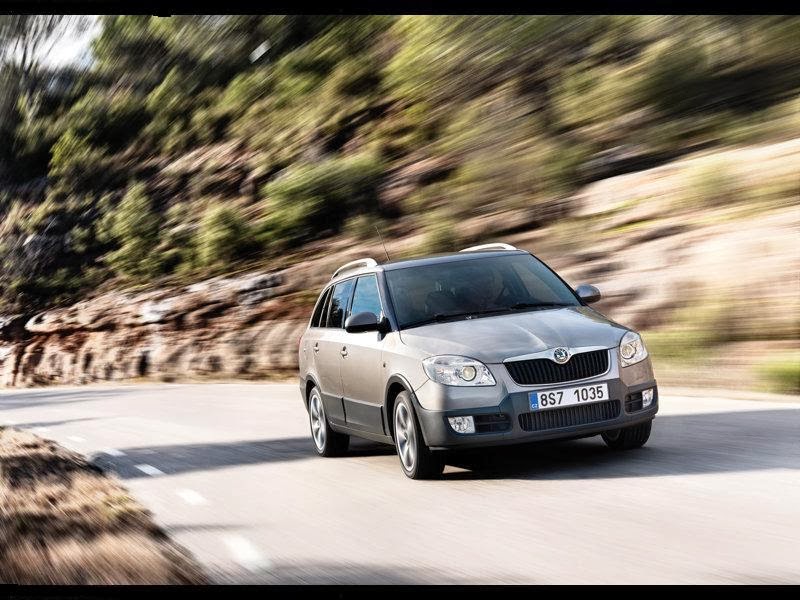
Škoda Auto has presented first photographs of the Škoda Fabia Scout  a vehicle that had its world premiere at the 2009 International Geneva Motor Show The design of the brand new Scout includes distinct features and cool looking protective elements  thus giving the small cars segment often looked at primarily from the perspective of functionality and economy some new emotional dimensions A uniquely shaped bumper and plastic guards give this new version of Škoda's popular estate more robust features  On top of all that protective elements on the sides of the body and a silver roof rack underline the Škoda Fabia Scout's bold shape

Four engines are available for the new Škoda Fabia Scout two petrol units  1.4 litres  63 kW (86 HP  fuel consumption 6.5l/100km and 1.6 litres 77 kW (105 HP  fuel consumption 6.9l/100km  the latter will also come with a six speed transmission  and two diesel engines (1.4 litres 59 kW (80 HP  fuel consumption 4.6l/100km and the top-class 1.9 litre engine offering 77 kW (105 HP and a fuel consumption of 4.9l/100km both diesel engines can be fitted with a diesel particulate filter.

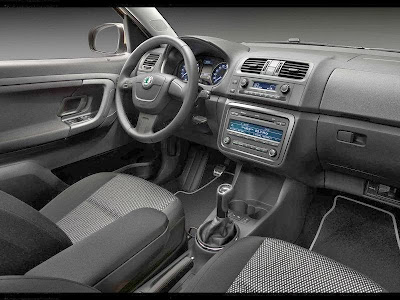
The dominant element of the interior is the Scout-specific upholstery  Lose woven carpets and the vehicle's tail bear the Scout sign  The pedals have a stainless steel surface with anti-slip heavy duty rubber elements

The Škoda Fabia Scout is fitted with Arktos lightweight alloy wheels designed specially for this model  As an optional equipment item  the customer can choose seventeen inch wheels of the same design instead of the sixteen inch standard version  Other distinctive features of the Škoda Fabia Scout include fog lamps  with corner design and tinted windows

Extending the very popular Scout portfolio the vehicle will be available from late May 2009

Skoda Fabia Scout model year 2010 Photo  from the inside
Skoda Fabia Scout model year 2010
Skoda Fabia Scout model year 2010 Photo  from the inside
Skoda Fabia Scout model year 2010
Skoda Fabia Scout model year 2010 Photo  from the inside
Skoda Fabia Scout model year 2010
Skoda Fabia Scout model year 2010 Photo  from the inside
Skoda Fabia Scout model year 2010
Skoda Fabia Scout model year 2010 Photo  from the inside

Tuesday, December 31, 2013

Skoda Yeti 4x4 model year 2011

0 comments
Skoda Yeti 4x4 model year 2011 From the inside
Skoda Yeti 4x4 model year 2011
People have never tired of talking about that mythical creature who, with his white fur coat and sharp teeth, lives high up in icy mountains. Although they have never met him, people still speak with great conviction of their encounter with that peaceful inhabitant of the dizzying heights, who is said to have shown many a lost soul the route from the regions of eternal ice to the safety of the valley below. Škoda Auto is celebrating a new member of our model range, which has been given the name of that helpful snowman: The Škoda Yeti is launched. The choice of name truly has a deeper significance. The Škoda Yeti is strong, geared to move under difficult conditions and help its passengers along where others give up. But it has the edge on the original Yeti: Unlike him, it is also happy in warmer areas, finding its way not just in difficult terrain and off road, but with equal confidence and assurance on the road.

These were precisely the aims its designers had in mind during Škoda Yeti's development: The fifth model in the Škoda range would combine these virtues, which have so far been realised by cars in completely different segments, but not found together in one vehicle. That is, the handling and driving comfort of conventional mid-range vehicles, combined with brilliant off-road capabilities. That such a vehicle should also provide above-average space, high carrying capacity and a powerful towing capability has raised the stakes considerably


The result marks a new chapter in the extremely diverse history of Škoda. Although in the past there were a number of off-road vehicles in the long-established Škoda brand, they never even remotely met the high demands of uncompromised suitability for driving on normal, public roads as well as off-road that Škoda Yeti does.

The first notable Škoda off-roader was a prototype of the Škoda Superb 3000 - Kfz 15 (type 956). From 1942 to 1943, it was built as a saloon with a 3.1 litre, in-line, six cylinder engine and four wheel drive. The type 973 off-road vehicle was produced from 1952 to 1956 and left its mark thanks to its off-road suitability, a wading depth of 600 millimetres, a climbing capability of 85 per cent and excellent handling on the road.

Yeti takes Škoda's experience of more than 100 years of car development, concentrating and honing it in a comfortable and powerful vehicle, setting new standards in the compact SUV segment. Škoda Yeti comes to market with five wide-opening doors, making access to the passenger compartment and luggage storing easy. In addition, permanent, intelligent, power-distributing four-wheel drive and ground clearance of 180 millimetres makes Škoda Yeti suitable for off-roading.

Škoda Yeti's overall length of 4,223 millimetres allows drivers to fit into even those parking spaces that are far from generous, while its width of 1,793 millimetres guarantees that the doors can be opened wide in tight spots. And if the terrain becomes rough and more challenging, the slim stature of the Škoda Yeti always finds a gap to get through. Dimensions are a height of 1,691 millimetres, unladen weight with driver of 1,520 kilograms (1.8 TSI 4x4) and a load of at least 545 kilograms, with flexible boot volume of 416 litres to 1,760 litres. A maximum trailer weight of 1,800 kilograms makes Škoda Yeti a safe and hardworking towing vehicle.

In the compact SUV segment, the Škoda Yeti encounters seasoned competitors, such as the Kia Sportage, the Hyundai Tucson, the Nissan Qashqai and Suzuki Grand Vitara. Škoda Yeti claims leadership in this very popular, but densely populated, class. Apart from its excellent off-road properties and handling characteristics in town, on country roads and motorways - which in no way lag behind those of the compact sector - the new Škoda possesses the youngest engine range in the segment. This ensures maximum fuel economy and the lowest possible emissions.

Škoda Yeti's developers believe the SUV class can only achieve lasting success with an environmentally sound and affordable engine strategy. Therefore, Škoda Yeti's engine range is based on Škoda's downsizing strategy, reducing capacity while at the same increasing performance, thanks to highly sophisticated forced induction. High torque at low engine speeds results from this innovative power unit development.

At the same time, consumption is lowered, easing the strain on Škoda Yeti drivers' wallets, and engine emissions drop, making a significant contribution to the reduction of CO2, NOX and HC. Škoda Yeti wants to be at home in nature and, therefore, not endanger it. For motorists who may not want permanent four-wheel drive, Škoda Auto also offers Yeti in front-wheel drive versions. The generous ground clearance of the new compact SUV still ensures better and safer progress on poor, rutted tracks
ŠKODA YETI SHOWS WHAT IT IS CAPABLE OF: THE DESIGN

Škoda Yeti wants to show what it is capable of. Its typical off-road design features mark it out as a self-confident and assured companion in everyday life as well as for special tasks. But the fifth Škoda model line nevertheless bears attributes typical of the brand and gives the new compact SUV a clear family identity, which was already apparent in the design study shown in 2005. Above all, this means the evocative rib-shaped grille with the distinct chrome surround and the Škoda logo centred above.

From the grille, feature lines run up the bonnet; loosening up the surface and finding their visual counterpart in the interior centre console. Large headlamps, fitted far up, provide Škoda Yeti with character, lending the front end a friendly look.

The side view is dominated by clear and serene lines, while the distinctly projecting wheel arches and wings confer on the compact SUV a unique character and the lower body protective panels are classic hallmarks of a vehicle with off-road capability. The black C pillars and roof rails as standard round off the robust shape.

The rear design is just as unfussy. The rear lights are C-shaped and the smooth, vertical tailgate opens easily and far upwards, so even tall drivers have no problems standing underneath it when it is raised. The tailgate window appears to wrap around the body encouraging the impression of a continuous window surface to the B pillar. This is a strong reminder of the visor optics that have become the key feature of the Škoda compact class. At the front and rear, underbody protection strips signal Škoda Yeti's off-road suitability, while front fog lamps enhance the front view.

The functional design of the 4,223 mm long and 1,793 mm wide body emanates lightness. Although the side view, with its prominent wings, 17" alloy wheels and 180 mm ground clearance give Škoda Yeti a robust look, it by no means appears cumbersome. The visual impression is confirmed by a look at the data. The minimum weight of the Škoda Yeti 1.8 TSI 4x4 with driver is 1,520 kilograms. The 103 kW (140 bhp) diesel-powered variant adds only 25 kg

HIGHLY SOPHISTICATED, FRUGAL AND POWERFUL. TWO PETROL ENGINES AND THREE DIESEL

Škoda Yeti's engine range includes five four-cylinder units with a performance spectrum from 77 kW to 125 kW (105 bhp to 170 bhp). It includes two petrol and three diesel units, which all meet the EU5 requirements.

The basic version is the 1.2 litre TSI petrol engine, which is used for the first time in a Škoda. This completely new power unit delivers 77 kW (105 PS) and provides its maximum torque of 175 Nm between 1,500 and 3,500 rpm. Customers can choose between the manual six-speed gearbox or the innovative seven-speed DSG.

The second petrol engine in the Škoda Yeti range is the muscular 1.8 TSI four cylinder with 118 kW (160 bhp). It reaches its torque peak of 250 Nm at very low engine speeds. The greatest pulling power is supplied between 1,500 and 4,500 rpm. Fuel consumption of this version, which is combined with permanent four-wheel drive, averages 8.0 litres per 100 kilometres (189 g/km CO2 emissions). This reduced consumption is due to measures such as a two-stage oil pump which, up to 3,500 rpm, works with a pressure of 1.8 bar and above that, if more oil is needed for lubrication, with 3.3 bar. An additional, second lambda sensor means improved exhaust quality, as the injection sequences and quantities can be controlled more precisely. Crankcase bearings, piston rings and further moveable engine components have been modified to reduce friction to optimum levels.

Also new for Škoda Yeti is the 2.0 TDI diesel range, available in three performance levels, all with direct common-rail injection and diesel particulate filter as standard. The basic version is the 81 kW (110 bhp) engine followed by 103 kW (140 bhp) unit. Maximum torque of 250 Nm and 320 Nm, respectively, is provided from 1,500 - 2,500 rpm and 1,750-2,500 rpm. Combined consumption for the 103 kW (140 bhp) version - with permanent four-wheel drive as standard - is 6.1 litres diesel per 100 kilometres, which means a CO2 emission of 159 g/km.

The top power unit of the diesel trio is the 125 kW (170 bhp) four cylinder with its burly torque of 350 Nm, reached between 1,750 and 2,500 rpm. Combined consumption over 100 kilometres is just 6.1 litres (159 g/km CO2). Exhaust gas recirculation, which - depending on revolutions and engine load - returns up to 60 per cent of the burnt mixture to the intake air, and a catalytic converter guarantee low exhaust gas values. On all four-wheel drive engine versions, the six-speed manual gearbox is supplied, with only the 2.0 TDI CR DPF/81 kW paired with a five-speed gearbox.

Petrol engines:

    1.2 TSI 77 kW/105 bhp (front-wheel drive) - 6-speed manual gearbox / 7-speed DSG
    1.8 TSI 118 kW/160 bhp (4x4) - 6-speed manual gearbox

Diesel engines

    2.0 TDI CR DPF 81 kW/110 bhp (front-wheel drive) - 5-speed manual gearbox
    2.0 TDI CR DPF 81 kW/110 bhp (4x4) - 6-speed manual gearbox
    2.0 TDI CR DPF 103 kW/140 bhp (4x4) - 6-speed manual gearbox    2.0 TDI CR DPF 
125 kW/170 bhp (4x4) - 6-speed manual gearbox

Skoda Yeti 4x4 model year 2011 From the inside
 Skoda Yeti 4x4 model year 2011
Skoda Yeti 4x4 model year 2011 From the inside
Skoda Yeti 4x4 model year 2011
Skoda Yeti 4x4 model year 2011 From the inside
Skoda Yeti 4x4 model year 2011 From the inside    
Skoda Yeti 4x4 model year 2011 From the inside

Thursday, December 12, 2013

Skoda Roomster Scout model year 2011

0 comments
From the inside Skoda Roomster Scout model year 2011

Skoda Roomster Scout model year 2011  The new Škoda Fabia Scout adds another model to the ruggedly attractive range of off-road-inspired editions. Following on from the Škoda Fabia Combi Scout and the Škoda Roomster Scout which have so far proved hugely popular in the small car and compact class, the hatchback version of the Škoda Fabia Scout now also benefits from their unmistakable style It fulfils the consumer demand for low priced individual mobility and, of course all three models benefit from the new, fresh face of the Fabia series and its numerous technical improvements

In recent years the Scout versions have developed into a well established part of the model range The Škoda Fabia Scout rounds off the lower end of the range by appealing to customers who may not need the increased loading capacity of the Škoda Fabia Combi Scout or Škoda Roomster Scout but who nevertheless want to enjoy the benefits of the strong rugged looks of a Scout version As with previous Scout models the Škoda Fabia will help significantly to add emotion to the brand as well appeal to those who are looking for something that little bit different Excellent value for money reliability and its attractive looks are also well known virtues of the Škoda brand all of which can be found in the Škoda Fabia Scout

The small car segment is generally regarded as being characterised by functionality and economy. The Škoda Fabia Scout breathes fresh air into this class with its robust good looks that add to this practical small car thanks to its evocative, specially designed bumpers and off road design The standard black and silver roof rails  fitted to both Škoda Fabia Combi Scout and Škoda Fabia Scout  as well as the protective plastic coverings along its flanks make the Škoda Fabia Scout a particularly characterful car whose design represents both zest for life and reliable style

The Škoda Fabia Scout is equipped with alloy wheels especially designed for this model. Instead of the standard 16 inch wheels customers can upgrade to larger 17-inch versions of the same design Front fog lamps and tinted windows round off the exterior features of the Škoda Fabia Scout

Distinctive Scout styling also features in the passenger compartment The upholstery, similar to that in the Škoda Fabia Combi Scout and the Škoda Roomster Scout is made of hard wearing and comfortable material. The floormats bear the Scout logo  which also appears on the boot to underline the Fabia Scout's identity. The Scout's pedals are fitted with brushed stainless steel treads as standard. The list of optional extras is identical to that of its Škoda Fabia Combi Scout and Škoda Roomster Scout siblings These revised models continue to impress with their excellent luggage capacity of up to 1485 litres in the Škoda Fabia Combi Scout and 1810 litres in the Škoda Roomster Scout. Škoda's unique mini-MPV concept also features the flexible VarioFlex rear seat system which allows the passenger compartment of the Škoda Roomster Scout to be configured to accommodate the most diverse haulage tasks

The excellent design standard equipment levels and assured sense of style set the Škoda Fabia and Škoda Roomster Scout apart fro their competition The highly sophisticated engine range which consists of four petrol engines with outputs from 63 kW  86 bhp to 77 kW 105 bhp and three diesel units from 55 kW  75 bhp to 77 kW  105 bhp are both agile and economical companions

From the inside Skoda Roomster Scout model year 2011

Tuesday, December 3, 2013

Skoda Roomster model year 2011

0 comments
Skoda Roomster model year 2011 From the inside
Skoda Roomster model year 2011 With the Škoda Fabia series Škoda Auto has established a strong foundation for its five-car portfolio The supermini's family roots are evident throughout. From the bold  elegant lines of its exterior styling down to its smallest component, the Fabia exemplifies Škoda's attention to detail through simple clever solutions and innovation  And now in spring 2010 the Škoda Fabia has been completely revised with a new face and an even greater emphasis on energy efficiency and comfort. The breadth of its technical innovations goes far beyond a mere facelift

The Škoda Fabia Combi and Škoda Roomster also receive the bold new look inside and out as well as numerous technical changes under the skin. But while the looks might have changed the characteristics of this multi-talented pair have not have not  With luggage capacity of 505 litres with its rear seats in place and 1485 litres with them flat the Škoda Fabia Combi continues to provide the sort of boot space that exceeds what is normally offered in this class Meanwhile the Škoda Roomster, with its extremely versatile VarioFlex rear seat system continues to fulfil the requirements of families and active people alike Its boot volume can be extended from a minimum of 480 litres to 1810 litres making the Škoda Roomster a load-carrying champion


The new Škoda Fabia RS also celebrates its premiere at the 2010 Geneva Motorshow and for the first time the sportiest Škoda Fabia is available as an estate. Its combination of a high performance 132 kW  180 bhp engine and low fuel consumption of just 6.4 itres/100 km mark it out as a class leader

With these variants of the Škoda Fabia series, Škoda Auto offers a model range in the small-car segment to meet almost every customer need

The completely redesigned front end incorporates strong horizontal forms which visually lower the Škoda Fabia despite its unchanged height. The Fabia now looks much more dynamic but does so without compromising any of its comfort With this redevelopment no component escaped our notice outlines Development Executive Eckhard Scholz of the comprehensive redesign The reason behind the redesign lies in the range of new, state-of-the-art and often turbo charged engines which debut in the Škoda Fabia, including a twin-charged unit. The comprehensive changes in the engine programme made it necessary to redevelop the Škoda Fabia's front end and so the opportunity to reprofile its face was taken. The bumper and its mountings, the headlamp shapes the bonnet and the front floor area - nothing is shared from the previous Škoda Fabia

The new grille and the three-dimensionally shaped headlamps define the new look of the Škoda Fabia their horizontal lines emphasising the front end's width The proportions appear a lot more relaxed states Škoda's Chief Designer, Jozef Kabaň. Its new face is more confident and dynamic yet also more elegant and mature it now appeals on an emotional level

Despite its redesign, the Škoda Fabia's existing virtues haven't been forgotten The visor-like window surface which wraps around the passenger compartment has always been a key feature of the Škoda Fabia, and remains so. The option for a complementary roof paint have been kept

Thanks to the new headlamps which stretch back into the front wings, its side profile appears lengthened, while the Škoda Fabia's elegant rear lights feature Škoda's trademark C-shaped graphic. All of these features ensure that the new Fabia continues to exemplify the brand

New wheel trims and aluminium wheel designs, together with the new colour options of Rally Green, Aqua Blue and Pacific Blue, finish off the renewal of the smallest Škoda. The hatchback versions of the Škoda Fabia are now also available with roof rails for the first time Lightweight construction and attention to detail keep their weight down to just two kilograms

Inside, the passenger compartment is enhanced by new materials and visual refinements. The chrome air vent inserts gear lever frame and handbrake button convey the Škoda Fabia's high quality The new three- and four-spoke are now optionally leather-covered and with multi-function control of the audio and telephone systems. Attractive, breathable seat covers and upgraded Climatronic air conditioning controls give the new Škoda Fabia the feel of a car from a much higher class

The driver's information display has also been redesigned, the central screen now featuring a gear-change indicator, which makes a significant contribution to higher fuel economy On versions with DSG gearbox the selected gear is displayed, while the constant display of the outside temperature in the central screen is a significant safety feature The function of the Tempomat and speed-limit warnings show the permitted top speed in countries with motorway speed limits and on vehicles with speed restrictions due to winter tyres

The previous monochrome, arrow-based graphics of the Škoda Fabia's navigation system have now been replaced by the sophisticated Amundsen system from larger Škodas. It features a five-inch touchscreen, SD card reader and a connection point for external memory devices. An additional Mobile Device Interface  MDI for use with the iPod, Aux-In, USB and Mini-USB units is also available and located in the lower glovebox This replaces the previous CD changer

The GSM phone preparation is also new The system is able to maintain two different Bluetooth connections at the same time via audio streaming. This means you can phone via the hands-free device while listening to music from an additional external source Both connections can be operated via the buttons on the optional multi function leather steering wheel. Voice control is also activated via a button on the multi-function leather steering wheel or on the phone holster of the GSM II Comfort system

The new Škoda Fabia's enhanced engine range is at the heart of all the innovations. A total of seven petrol and three diesel engines are available. Power outputs range from 44 kW (60 bhp) to 132 kW (180 bhp) for the petrol engines, while the diesel units deliver between 55 kW (75 bhp) and 77 kW (105 bhp All the engines meet EU5 exhaust emissions regulations offer excellent fuel efficiency and therefore, extremely low CO2 emissions All cars with manual gearboxes include a gear selection indicator to encourage fuel-efficient driving. An arrow on the dashboard insert screen suggests when to change gears in order to keep the engine in its most efficient rev range

As elsewhere in the Škoda family, the engine range is determined by the art of downsizing Drastically reduced engine capacities are supplemented by turbo charging or double-charging and high precision direct fuel injection in order to achieve the optimal combination of performance as well as fuel efficiency. Turbo charging significantly increases torque levels particularly on petrol engines, while the pulling power is available from much lower revs than with conventional, naturally aspirated engines The top power unit of the Škoda Fabia series is the four-cylinder petrol engine in the Škoda Fabia RS Despite its capacity of just 1.4-litres double charging via a turbocharger with wastegate and a mechanical, shiftable supercharger ensures that the power output is 132 kW  180 bhp while peak torque is a similarly impressive 250 Nm from 2,000 rpm right through to 4,500rpm. Despite the muscular performance combined consumption is just 6.4 l/100km while CO2 emissions are just 148 g/km

But the performance wasn't the only development target The environmental compatibility smooth running and hence noise levels of the engines set new standards in the Škoda Fabia When connected to the optimised seven-speed direct shift DSG  the new 1.2 TSI engine with 77 kW  105 bhp offers outstandingly low running costs Fuel consumption of just 5.3 litres petrol per 100 km  53.3 mpg and CO2 emissions of only 124 g/km are exceptional for its performance level. The 1.2 TSI is offered in two performance levels  63 kW (86 bhp) and 77 kW (105 bhp). Both are combined with a smooth manual five-speed gearbox as standard

As well as engine improvements, the reduction of friction and the adoption of lightweight construction also increase efficiency. For the 1.2 litre three cylinder engines a new, weight-reduced crankshaft has been developed, which is 1.7 kg lighter than its predecessor. Resources are also saved in production: the casting is a whole kilogram lighter than before and there are fewer production residues.

The diesel engines offer a performance spectrum from 55 kW (75 bhp) to 77 kW (105 bhp with capacities of 1.2- and 1.6-litres. All are equipped with a diesel particulate filter and high pressure injection via a common-rail system. With an injection pressure of up to 1,600 bar is achieved, and fast-response Piezo injectors which allow up to five injections per cycle, engine refinement is noticeably improved and there is a drastic reduction of both fuel consumption and exhaust emissions. An additional cleaning of the exhaust gases is achieved by an oxidation catalyst and the exhaust gas recirculation in all diesel engine versions of the Škoda Fabia series

A further development area was the reduction of the noise level of the two 1.2 HTP three-cylinder petrol engines. Instead of the normal sleeve-type camshaft chain, a toothed chain was chosen, whose three-part chain elements roll more smoothly and quietly on the gear wheels. This creates significantly reduced running noises, especially during the overrun operation of the three cylinder engines, mainly at higher revs, which were previously perceived as unpleasant. Sound levels through the most commonly used rev range between 1,600 and 3,400 rpm are also clearly reduced.

The engines range of the new Škoda Fabia

    1.2 HTP/44 kW (60 bhp) - EU 5 (not for the Roomster)
    1.2 12V HTP/51 kW (70 bhp) - EU 5/EU2
    1.4 16V/63 kW (86 bhp) - EU 5
    1.2 TSI/63 kW (86 bhp) - EU 5
    1.2 TSI/77 kW (105 bhp) - EU 5
    1.6 16V/77 kW (105 bhp) - EU 4/EU 2
    1.6 16V/77 kW  105 bhp A  - EU 4/EU 2
    1.4 TSI/132 kW  180 bhp  - EU 5 for RS
    1.2 TDI CR DPF/55 kW  75 bhp  - EU 5/EU 4
    1.6 TDI CR DPF/66 kW  90 bhp  - EU 5
    1.6 TDI CR DPF/77 kW  105 bhp) - EU 5

A series of safety systems ensure the security all the Škoda Fabia's passengers and also of other road users. Four airbags protect the occupants in every Škoda Fabia, while a further two are as options ABS with brake assistant is also a standard fitment and  in many markets ESP which now includes tyre pressure warning or hill assistant  is also fitted

The new headlamp system has been designed to offer dazzle-free and wide illumination whether reflector or projector units are fitted. An energy-efficient daytime running light system is integrated into the new double-chamber fog lamps roughly halving their energy consumption. This technology also allows a better illumination of the road in fog

In emergency braking situations  7 m/s2 at more than 60 km/h   the brake lights or hazard warning lights flash at a frequency of 3 Hz to warn the following traffic  If, after the emergency braking, the speed is under 10 km/h and the deceleration is under 2.5 m/s2, the hazard warning lights come on with their normal cycle  1.25 Hz to alert the following drivers.

To increase security the Škoda Fabia's the windows can be controlled via the key's remote control. This can be used to close the windows when leaving the car or open the window from a distance to cool the interior if it is parked in direct sunlight

In any case, the anti-theft system in the new Fabia has become even more resilient  A new generation immobiliser protects the new Škoda Fabia more effectively against theft

Mechanically a bigger brake servo makes the new Škoda Fabia more responsive during braking thanks to the bigger cylinder This allows a faster and above all more sensitive retardation

Together with the finely-tuned running gear, independent four-wheel suspension by McPherson struts and triangular wishbones and a rear torsion beam as well as the excellent crash safety of the body the Škoda Fabia offers a more comprehensive protection and comfort than ever before.

Standard equipment Classic

    Driver and passenger airbag
    Front side airbags
    ABS incl. engine torque control + dual rate
    Four-spoke steering wheel (height-and reach-adjustable
    Power steering,
    Daytime running lights
    Bottle holders in the storage boxes of the front and rear door trim
    Outside temperature display

Standard equipment Ambiente in addition to Classic

    Dashboard with multi-function display (on-board computer
    Split folding rear seats (on average 60/40
    Central locking
    Radio preparation with 4 speakers,
    Overhead package I  3 folding roof handles  at rear with coat hook 2 reading lights at front for driver and passenger, vanity mirror in sun visor on driver and passenger side
    Electric front window lifters,
    Door mirrors and door handles in body colour
    Chrome package  gear lever knob  gear lever surround air supply adjuster, handbrake locking button

Standard equipment   Active  in addition to Ambiente

    Head airbags  for EU  15 countries
    Seat belt fastening signal for driver and passenger  for EU, 15 countries),
    Front fog lamps and deactivatable day lights,
    Small leather package  3 spoke steering wheel, gear lever knob, handbrake handle
    Projector halogen headlamps
    Glasses case
    Height adjustable driver seat
    Tinted windows
    Side protection strips  black

Standard equipment Elegance  in addition to Ambiance

    Front fog lamps and deactivatable day time running lights
    Projector halogen headlamps
    Glasses case
    Front arm rests
    Textile floor mats
    Central locking with remote control (folding remote keys
    Climatic air conditioning with automatic regulation
    Height adjustable driver and front passenger seats
    Overhead package II  overhead package I and rear reading light
    Electrically adjustable and heated door mirrors
    Tinted windows
    Alloy wheels  Atik 6J×14
    Side protection strips, black

Special equipment

    Head airbags
    Passenger airbag   deactivatable
    ABS Plus including torque control, dual rate and tyre pressure warning
    ESP including ABS  engine torque control  TCS  EDL  hydraulic brake assistant
    ESP Plus including ABS  torque control  TCS  EDL  hydraulic brake assistant  hill start assist and tyre pressure warning
    Cruise control
    Projector halogen headlamps with swivel module
    Front fog lamps with cornering function
    Maxi DOT display
    Multi-function steering wheels for radio and phone operation
    Roof rails for Hatchback and Estate
    Climatic air conditioning with automatic regulation
    Climatronic air conditioning with electronic regulation and combined filter
    Radios 'Blues  and  Swing
     Amundsen  navigation system
    MDI  mobile device interface   only for  Swing  or  Amundsen
    Parking assistance  rear parking sensors
    Hands-free devices GSM II Compact and Comfort,
    Alarm with interior protection  horn, towing protection,
    15" alloy wheels Antares , Avior and Line
    16  alloy wheels Atria  Comet and Elba
    17  alloy wheels Trinity with sports running gear
    Side protection strips  black
    Rear mud flaps
    White/silver roof  hatchback only 
    Bumpy road package  Fabia and Fabia Combi
    Tinted windows
    Sun set
    Electric glass sun roof  Fabia and Fabia Combi  Panoramic sunroof  Roomster
    Sports package  sports seats + three-spoke leather steering wheel
    Leather package  seats + steering wheel + gear lever knob + handbrake handle
    Heated front seats
    Smoker package  lighter and ashtray
    Front arm rest
    Partition net  Fabia Combi and Roomster
    Net programme  3 nets only for Fabia Combi and Roomster
    Bag hook in the boot
    Function package folding storage boxes under the front seats, storage boxes in rear door trim, folding hooks on sides in the boot, open storage boxes behind rear wheel arches, flexible storage box on right side of boot  glasses case  overhead package II  for Estate version also with 12V socket in boot

Skoda Roomster model year 2011 From the inside
Skoda Roomster model year 2011
Skoda Roomster model year 2011 From the inside
Skoda Roomster model year 2011
Skoda Roomster model year 2011 From the inside
Skoda Roomster model year 2011
Skoda Roomster model year 2011 From the inside
From the inside
Skoda Roomster model year 2011 From the inside

Tuesday, November 26, 2013

Skoda MissionL Concept model year 2011

0 comments
Skoda MissionL Concept model year 2011 From the inside
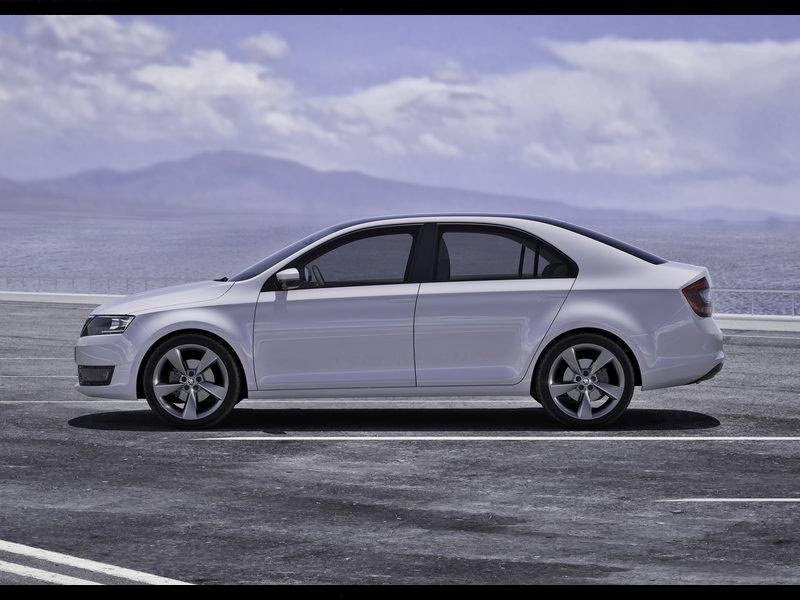
Skoda MissionL Concept model year 2011 The main attraction of Škoda's presentation at the 2011 Frankfurt International Motor Show is a liftback design concept called MissionL  Close to the series-production design, this concept car offers a glimpse of Škoda's sixth model line that will be launched in Europe Russia and China in 2012  Before the end of 2011 the brand will also launch a new compact sedan in India. Intended exclusively for the Indian market this car will start Škoda's  Model Offensive an extensive project designed to help the brand increase its global annual sales to 1.5 million vehicles by 2018

The Škoda MissionL Concept boasts pure lines and precision workmanship in every last detail. Well-balanced proportions are a combination of purely designed surfaces and sharp-cut lines  The impression of robustness and elegance of this liftback is underlined by bold wing lines combined with 18 lightweight alloy wheels. Much like in the VisionD concept, one of the dominant features of the front end is the new look of Škoda's typical design elements. The winged arrow logo is now an independent item dominating the front edge of the bonnet  Formed by vertical lamellas the radiator grille is set in a chrome-plated frame Arranged in a four-leaf clover pattern, the car's headlamps and front fog lamps stand out especially in twilight  The crystalline structure of slim-line integrated flashers and daytime lamps in the bottom part of the main headlamps is based on sharp lines that clearly refer to the excellent workmanship of Czech glass  cutters and this motif also appears in other places both on the body and in the interior

The designers have used the joints between the wings and the bumper as bold decorative elements Each of the sharp lines ends harmonically Three lines on the sides and the rear form a gentle cut-glass-like triangle at the taillights. The tail lamps boast a white clear and gentle crystal-cut surface and are surrounded by a red C-shaped rear lamp

Škoda MissionL Concept's interior is covered with a dark-tinted glass panoramic roof  Just like the exterior the interior is highly elegant. On top of that, the interior combines sophisticated ergonomics with high functionality While the horizontal structure of the interior is a demonstration of generosity, the dashboard the seat upholstery and the steering wheel with its white-and-beige design add youthful esprit. The door panels are covered with textile cut-crystal patterned upholstery that brings the motif of the Czech glass-making tradition to the car's interior as well

 We have taken a very purist approach to this design study  we have structured the surfaces simply, but impressively says Head of Škoda's Design Department Jozef Kabaň about the philosophy of this concept As a result, the vehicle has a strong  sporty look The design conveys straightforwardness and a youthful character Life often becomes very complicated and many people react by resorting to precision high-quality materials and minimalism The Škoda MissionL Concept offers all that adds Jozef Kaban
Skoda MissionL Concept model year 2011 From the inside
 Skoda MissionL Concept model year 2011
Skoda MissionL Concept model year 2011 From the inside
 Skoda MissionL Concept model year 2011
Skoda MissionL Concept model year 2011 From the inside
Skoda MissionL Concept model year 2011 From the inside  
From the inside
Skoda MissionL Concept model year 2011 From the inside

Thursday, November 21, 2013

Skoda Fabia Scout model year 2011

0 comments
  Skoda Fabia Scout model year 2011 From the inside
Skoda Fabia Scout model year 2011 The new Škoda Fabia Scout adds another model to the ruggedly attractive range of off-road-inspired editions. Following on from the Škoda Fabia Combi Scout and the Škoda Roomster Scout, which have so far proved hugely popular in the small car and compact class, the hatchback version of the Škoda Fabia Scout now also benefits from their unmistakable style. It fulfils the consumer demand for low-priced, individual mobility and, of course, all three models, benefit from the new, fresh face of the Fabia series and its numerous technical improvements.

In recent years the Scout versions have developed into a well-established part of the model range. The Škoda Fabia Scout rounds off the lower end of the range by appealing to customers who may not need the increased loading capacity of the Škoda Fabia Combi Scout or Škoda Roomster Scout, but who nevertheless want to enjoy the benefits of the strong, rugged looks of a Scout version. As with previous Scout models, the Škoda Fabia will help significantly to add emotion to the brand as well appeal to those who are looking for something that little bit different. Excellent value for money, reliability and its attractive looks are also well-known virtues of the Škoda brand, all of which can be found in the Škoda Fabia Scout.

The small car segment is generally regarded as being characterised by functionality and economy. The Škoda Fabia Scout breathes fresh air into this class, with its robust good looks that add to this practical small car, thanks to its evocative, specially designed bumpers and off-road design. The standard black and silver roof rails - fitted to both Škoda Fabia Combi Scout and Škoda Fabia Scout - as well as the protective plastic coverings along its flanks make the Škoda Fabia Scout a particularly characterful car, whose design represents both zest for life and reliable style.

The Škoda Fabia Scout is equipped with alloy wheels especially designed for this model. Instead of the standard 16-inch wheels, customers can upgrade to larger 17-inch versions of the same design. Front fog lamps and tinted windows round off the exterior features of the Škoda Fabia Scout.

Distinctive Scout styling also features in the passenger compartment: The upholstery, similar to that in the Škoda Fabia Combi Scout and the Škoda Roomster Scout is made of hard-wearing and comfortable material. The floormats bear the Scout logo, which also appears on the boot to underline the Fabia Scout's identity. The Scout's pedals are fitted with brushed stainless steel treads as standard. The list of optional extras is identical to that of its Škoda Fabia Combi Scout and Škoda Roomster Scout siblings. These revised models continue to impress with their excellent luggage capacity of up to 1485 litres in the Škoda Fabia Combi Scout, and 1810 litres in the Škoda Roomster Scout. Škoda's unique mini-MPV concept also features the flexible VarioFlex rear seat system, which allows the passenger compartment of the Škoda Roomster Scout to be configured to accommodate the most diverse haulage tasks.

The excellent design, standard equipment levels and assured sense of style set the Škoda Fabia and Škoda Roomster Scout apart fro their competition. The highly sophisticated engine range, which consists of four petrol engines with outputs from 63 kW (86 bhp) to 77 kW 105 bhp) and three diesel units from 55 kW (75 bhp) to 77 kW (105 bhp), are both agile and economical companions

  Skoda Fabia Scout model year 2011 From the inside
Skoda Fabia Scout model year 2011
  Skoda Fabia Scout model year 2011 From the inside
Skoda Fabia Scout model year 2011 From the inside
  Skoda Fabia Scout model year 2011 From the inside
Friday, November 15, 2013

Skoda Fabia Combi RS model year 2011

0 comments
Skoda Fabia Combi RS model year 2011 From the inside
Skoda Fabia Combi RS model year 2011 Škoda Auto has a long-standing association with motor sport. From its earliest years, competition cars from Mladá Boleslav have been winning on the world's racing circuits and rally stages. The latest RS road cars carry on this sporting tradition, which gives the second-generation Škoda Fabia RS a head start on the competition. And now for the first time there are two RS versions in the Škoda Fabia range: both hatchback and estate bodystyles continue the RS range's renowned combination of sporty performance with exceptional fuel efficiency and environmental-friendliness.

Both versions of the new Škoda Fabia RS are unmistakable thanks to their unique front bumpers with integrated fog lamps, which can also be equipped as a option with a cornering light function or LED daytime running lights. The RS symbol sits proudly within the grille's chromed frame, while red-painted brake callipers hint at their performance potential from behind the spokes of bespoke 17-inch 'Gigaro' aluminium wheels. As well as tinted windows, the rear sports a new bumper design and a dual-pipe exhaust. The roof and the rear spoiler of the hatchback are available in black, white and silver on request and depending on the car's body colour


The roof spoiler on both hatchback and estate versions increases downforce at higher speeds which, when combined with the uprated running gear and performance-orientated electronic driver aids - ESP, ABS, TCS, TPM and HHC - gives the Škoda Fabia RS safe and agile handling. Meanwhile the standard XDS differential increases driving pleasure by braking the inside front wheel when accelerating through corners, transferring torque to the outside wheel. The lateral torque helps to pull the Škoda Fabia RS into bends, enhancing its cornering ability and gives the athletic Škoda's newfound agility.

Inside, new sports seats feature the RS symbol on their backrests, while Škoda Fabia RS customers can also order red seat covers and black floor mats with silver or red offset seams depending on the upholstery colour. The Onyx-coloured dashboard is equipped with a three-spoke leather steering wheel with an optional multi-function version with gear change paddles for manual control of the standard seven-speed automatic DSG gearbox. As with all versions of the Škoda Fabia, the steering wheel is adjustable for height and reach, with the driver's seat also benefiting from height adjustment. The steering wheel, gear lever and handbrake handle are leather upholstered as standard, while the pedals are fitted with stainless steel treads. All Škoda Fabia RS models are fitted with Climatic air conditioning, an 'RS' dash insert as well as a four-speaker stereo system as standard.

With a top speed of 224 km/h  226 km/h for the estate version - and the ability to accelerate from 0 to 100 km/h in just 7.3 seconds, both models offer truly sporty performance. Škoda Auto has introduced a dual-charged four cylinder petrol engine to its range for the first time, which produces 132 kW (180 bhp) from only 1.4 litre capacity and a torque peak of 250 Nm from 2,000 rpm through to 4,500 rpm. Despite the impressive performance, combined fuel consumption in the NEDC measuring cycle is very low: both RS versions require just 6.4 litres of fuel to drive 100 kilometres.

This feat of power and efficiency is achieved by fine-tuned technology. The 1.4 TSI engine features direct fuel injection and dual-charging via a turbocharger with wastegate and a mechanical, shiftable supercharger. In addition, an intercooler increases air volume for compression within the combustion chambers. The fuel pump carries the fuel to the injectors with pressure of up to 150 bar, while the camshaft controlling the two inlet valves is continuously adjustable on each cylinder. Both shafts are controlled via a maintenance-free chain drive. The 1.4 TSI's cylinder block is made of cast iron, the crankshaft of steel.

The supercharger and turbocharger work hand-in-hand to provide harmonious power delivery across the engine's rev range. The mechanically-driven supercharger supplies the combustion chambers up to engine speeds of 2,400 rpm when the engine is under the part load, while under full load it is uncoupled at a maximum of 3,500 rpm. By this point the exhaust-driven turbocharger has reached its full effectiveness and continues to feed the engine in the higher rev range The use of double fuel injection during cold starting reduces harmful emissions by allowing the catalyst and lambda sensor to reach optimum operating temperature after driving just a few metres, guaranteeing effective exhaust gas treatment.

But it's not just the harmonious power delivery that makes both Škoda Fabia RS versions perfectly suited to daily use. Its luggage capacity  300 to 1,163 litres in the hatchback; the estate, 480 to 1,460 litres) and the practical loading facility also add to its usefulness. Its handling is distinguished by its incredibly high agility, without adversely affecting the ride comfort However, neither Škoda Fabia RS, hatch nor estate are factory approved for use as towing vehicles


The standard equipment

    Driver and passenger front and side airbags,
    ESP including ABS torque control  MSR TCS EDL hydraulic brake assistant HBA hill start assist and tyre pressure monitor  TPM
    Front fog lights
    Three-spoke leather wrapped steering wheel (height-and reach-adjustable
    Front sports seats
    Sports running gear
    Projector halogen headlights
    Daytime running lights
    Maxi DOT display
    Outside temperature display
    Split folding rear seats (60/40
    Central locking
    Climatic air conditioning with automatic regulation
    Radio preparation with 4 speakers
    Height-adjustable driver and front passenger seats
    Electric front windows
    Electrically adjustable and heated door mirrors
    Black painted door mirrors, with door handles in vehicle colour,
    Tinted windows
    Gigaro 7J×17 alloy wheels  silver
    Chrome package  gear lever knob, gear lever surround, air supply adjuster, handbrake locking button),
    Small leather package  3 spoke steering wheel, gear lever knob, handbrake handle),
    Textile floor mats (with silver-grey lining

Optional equipment
    Front passenger airbag - deactivation switch
    LED daytime running lights
    Glasses case
    Front arm rests
    Textile floor mats
    Central locking with remote control (with folding keys
    Roof rails for hatchback and estate
    3-spoke multi-functional leather steering wheel for radio and telephone (with paddles aut. gearbox DSG
    Climatronic air conditioning with electronic regulation and combined filter
    Radios  Blues and  Swing
     Amundsen' navigation system
    MDI (mobile device interface only for  Swing or  Amundsen
    Hands-free devices GSM II Compact and Comfort
    Gigaro 7J×17 alloy wheels - black, anthracite white
    Silver white or black roof
Skoda Fabia Combi RS model year 2011 From the inside
Skoda  Fabia  Combi RS model year 2011
Skoda Fabia Combi RS model year 2011 From the inside
From the inside
Skoda Fabia Combi RS model year 2011 From the inside

Thursday, November 7, 2013

Skoda Fabia Combi model year 2011

0 comments
Skoda Fabia Combi model year 2011  From the inside
The new Škoda Fabia RS also celebrates its premiere at the 2010 Geneva Motorshow and, for the first time, the sportiest Škoda Fabia is available as an estate. Its combination of a high performance 132 kW (180 bhp engine and low fuel consumption of just 6.4 itres/100 km mark it out as a class leader.

With these variants of the Škoda Fabia series, Škoda Auto offers a model range in the small-car segment to meet almost every customer need.

The completely redesigned front end incorporates strong horizontal forms which visually lower the Škoda Fabia despite its unchanged height. The Fabia now looks much more dynamic but does so without compromising any of its comfort.  With this redevelopment no component escaped our notice outlines Development Executive Eckhard Scholz of the comprehensive redesign. The reason behind the redesign lies in the range of new, state-of-the-art and often turbo-charged engines, which debut in the Škoda Fabia, including a twin-charged unit. The comprehensive changes in the engine programme made it necessary to redevelop the Škoda Fabia's front end and so the opportunity to reprofile its face was taken. The bumper and its mountings, the headlamp shapes, the bonnet and the front floor area - nothing is shared from the previous Škoda Fabia

The new grille and the three-dimensionally shaped headlamps define the new look of the Škoda Fabia, their horizontal lines emphasising the front end's width  The proportions appear a lot more relaxed states Škoda's Chief Designer, Jozef Kabaň. Its new face is more confident and dynamic yet also more elegant and mature it now appeals on an emotional level.

Despite its redesign, the Škoda Fabia's existing virtues haven't been forgotten. The visor-like window surface which wraps around the passenger compartment has always been a key feature of the Škoda Fabia, and remains so The option for a complementary roof paint have been kept

Thanks to the new headlamps which stretch back into the front wings, its side profile appears lengthened, while the Škoda Fabia's elegant rear lights feature Škoda's trademark C-shaped graphic. All of these features ensure that the new Fabia continues to exemplify the brand

New wheel trims and aluminium wheel designs, together with the new colour options of Rally Green, Aqua Blue and Pacific Blue, finish off the renewal of the smallest Škoda. The hatchback versions of the Škoda Fabia are now also available with roof rails for the first time. Lightweight construction and attention to detail keep their weight down to just two kilograms

Inside, the passenger compartment is enhanced by new materials and visual refinements. The chrome air vent inserts, gear lever frame and handbrake button convey the Škoda Fabia's high quality. The new three- and four-spoke are now optionally leather-covered and with multi-function control of the audio and telephone systems. Attractive, breathable seat covers and upgraded Climatronic air conditioning controls give the new Škoda Fabia the feel of a car from a much higher class.

The driver's information display has also been redesigned, the central screen now featuring a gear-change indicator, which makes a significant contribution to higher fuel economy. On versions with DSG gearbox the selected gear is displayed, while the constant display of the outside temperature in the central screen is a significant safety feature. The function of the Tempomat and speed-limit warnings show the permitted top speed in countries with motorway speed limits and on vehicles with speed-restrictions due to winter tyres

The previous monochrome arrow-based graphics of the Škoda Fabia's navigation system have now been replaced by the sophisticated Amundsen system from larger Škodas. It features a five-inch touchscreen, SD card reader and a connection point for external memory devices. An additional Mobile Device Interface (MDI) for use with the iPod, Aux-In, USB and Mini-USB units is also available and located in the lower glovebox This replaces the previous CD changer

The GSM phone preparation is also new. The system is able to maintain two different Bluetooth connections at the same time via audio streaming. This means you can phone via the hands-free device while listening to music from an additional external source. Both connections can be operated via the buttons on the optional multi-function leather steering wheel. Voice control is also activated via a button on the multi-function leather steering wheel or on the phone holster of the GSM II Comfort system

The new Škoda Fabia's enhanced engine range is at the heart of all the innovations. A total of seven petrol and three diesel engines are available Power outputs range from 44 kW (60 bhp) to 132 kW  180 bhp for the petrol engines while the diesel units deliver between 55 kW (75 bhp and 77 kW (105 bhp All the engines meet EU5 exhaust emissions regulations, offer excellent fuel efficiency and therefore, extremely low CO2 emissions. All cars with manual gearboxes include a gear selection indicator to encourage fuel-efficient driving. An arrow on the dashboard insert screen suggests when to change gears in order to keep the engine in its most efficient rev range.

As elsewhere in the Škoda family, the engine range is determined by the art of downsizing. Drastically reduced engine capacities are supplemented by turbo-charging or double-charging and high precision direct fuel injection in order to achieve the optimal combination of performance as well as fuel efficiency. Turbo-charging significantly increases torque levels, particularly on petrol engines, while the pulling power is available from much lower revs than with conventional, naturally-aspirated engines. The top power unit of the Škoda Fabia series is the four-cylinder petrol engine in the Škoda Fabia RS. Despite its capacity of just 1.4-litres, double-charging via a turbocharger with wastegate and a mechanical, shiftable supercharger ensures that the power output is 132 kW (180 bhp) while peak torque is a similarly impressive 250 Nm from 2,000 rpm right through to 4,500rpm. Despite the muscular performance, combined consumption is just 6.4 l/100km while CO2 emissions are just 148 g/km

But the performance wasn't the only development target The environmental compatibility, smooth running and hence noise levels of the engines set new standards in the Škoda Fabia. When connected to the optimised seven-speed direct shift DSG  the new 1.2 TSI engine with 77 kW (105 bhp) offers outstandingly low running costs. Fuel consumption of just 5.3 litres petrol per 100 km (53.3 mpg) and CO2 emissions of only 124 g/km are exceptional for its performance level. The 1.2 TSI is offered in two performance levels - 63 kW (86 bhp) and 77 kW (105 bhp Both are combined with a smooth manual five-speed gearbox as standard.

As well as engine improvements, the reduction of friction and the adoption of lightweight construction also increase efficiency. For the 1.2 litre three cylinder engines a new, weight-reduced crankshaft has been developed, which is 1.7 kg lighter than its predecessor. Resources are also saved in production: the casting is a whole kilogram lighter than before and there are fewer production residues

The diesel engines offer a performance spectrum from 55 kW (75 bhp) to 77 kW (105 bhp), with capacities of 1.2- and 1.6-litres. All are equipped with a diesel particulate filter and high pressure injection via a common-rail system. With an injection pressure of up to 1,600 bar is achieved, and fast-response Piezo injectors which allow up to five injections per cycle, engine refinement is noticeably improved and there is a drastic reduction of both fuel consumption and exhaust emissions. An additional cleaning of the exhaust gases is achieved by an oxidation catalyst and the exhaust gas recirculation in all diesel engine versions of the Škoda Fabia series

A further development area was the reduction of the noise level of the two 1.2 HTP three-cylinder petrol engines. Instead of the normal sleeve-type camshaft chain, a toothed chain was chosen, whose three-part chain elements roll more smoothly and quietly on the gear wheels. This creates significantly reduced running noises, especially during the overrun operation of the three cylinder engines, mainly at higher revs which were previously perceived as unpleasant. Sound levels through the most commonly used rev range, between 1,600 and 3,400 rpm are also clearly reduced

The engines range of the new Škoda Fabia

    1.2 HTP/44 kW (60 bhp) - EU 5 (not for the Roomster)
    1.2 12V HTP/51 kW (70 bhp) - EU 5/EU2
    1.4 16V/63 kW (86 bhp) - EU 5
    1.2 TSI/63 kW (86 bhp) - EU 5
    1.2 TSI/77 kW (105 bhp) - EU 5
    1.6 16V/77 kW (105 bhp) - EU 4/EU 2
    1.6 16V/77 kW (105 bhp)(A) - EU 4/EU 2
    1.4 TSI/132 kW (180 bhp) - EU 5 for RS
    1.2 TDI CR DPF/55 kW (75 bhp) - EU 5/EU 4
    1.6 TDI CR DPF/66 kW (90 bhp) - EU 5
    1.6 TDI CR DPF/77 kW (105 bhp) - EU 5

A series of safety systems ensure the security all the Škoda Fabia's passengers and also of other road users. Four airbags protect the occupants in every Škoda Fabia, while a further two are as options available. ABS with brake assistant is also a standard fitment and, in many markets, ESP, which now includes tyre pressure warning or hill assistant, is also fitted.

The new headlamp system has been designed to offer dazzle-free and wide illumination whether reflector or projector units are fitted. An energy-efficient daytime running light system is integrated into the new double-chamber fog lamps, roughly halving their energy consumption. This technology also allows a better illumination of the road in fog.

In emergency braking situations - 7 m/s2 at more than 60 km/h - the brake lights or hazard warning lights flash at a frequency of 3 Hz to warn the following traffic. If, after the emergency braking, the speed is under 10 km/h and the deceleration is under 2.5 m/s2, the hazard warning lights come on with their normal cycle (1.25 Hz) to alert the following drivers

To increase security, the Škoda Fabia's the windows can be controlled via the key's remote control. This can be used to close the windows when leaving the car or open the window from a distance to cool the interior if it is parked in direct sunlight.

In any case, the anti-theft system in the new Fabia has become even more resilient. A new generation immobiliser protects the new Škoda Fabia more effectively against theft.

Mechanically, a bigger brake servo makes the new Škoda Fabia more responsive during braking thanks to the bigger cylinder. This allows a faster and, above all, more sensitive retardation.

Together with the finely-tuned running gear, independent four-wheel suspension - by McPherson struts and triangular wishbones and a rear torsion beam - as well as the excellent crash safety of the body, the Škoda Fabia offers a more comprehensive protection and comfort than ever before.

Standard equipment - Classic:

    Driver and passenger airbag,
    Front side airbags,
    ABS incl. engine torque control + dual rate,
    Four-spoke steering wheel (height-and reach-adjustable),
    Power steering,
    Daytime running lights,
    Bottle holders in the storage boxes of the front and rear door trim,
    Outside temperature display.

Standard equipment - Ambiente  in addition to Classic

    Dashboard with multi-function display  on-board computer),
    Split folding rear seats (on average 60/40),
    Central locking,
    Radio preparation with 4 speakers
    Overhead package I (3 folding roof handles, at rear with coat hook, 2 reading lights at front for driver and passenger, vanity mirror in sun visor on driver and passenger side
    Electric front window lifters,
    Door mirrors and door handles in body colour,
    Chrome package  gear lever knob, gear lever surround, air supply adjuster  handbrake locking button

Standard equipment - Active  in addition to Ambiente

    Head airbags (for EU, 15 countries
    Seat belt fastening signal for driver and passenger  for EU, 15 countries
    Front fog lamps and deactivatable day lights
    Small leather package  3 spoke steering wheel, gear lever knob, handbrake handle
    Projector halogen headlamps
    Glasses case
    Height adjustable driver seat
    Tinted windows
    Side protection strips, black

Standard equipment - Elegance  in addition to Ambiance

    Front fog lamps and deactivatable day time running lights
    Projector halogen headlamps
    Glasses case
    Front arm rests
    Textile floor mats
    Central locking with remote control (folding remote keys
    Climatic air conditioning with automatic regulation
    Height adjustable driver and front passenger seats
    Overhead package II (overhead package I and rear reading light
    Electrically adjustable and heated door mirrors
    Tinted windows
    Alloy wheels, Atik 6J×14
    Side protection strips, black

Special equipment

    Head airbags
    Passenger airbag  deactivatable
    ABS Plus including torque control, dual rate and tyre pressure warning
    ESP including ABS, engine torque control, TCS, EDL, hydraulic brake assistant,
    ESP Plus including ABS, torque control TCS, EDL hydraulic brake assistant, hill start assist and tyre pressure warning
    Cruise control,
    Projector halogen headlamps with swivel module
    Front fog lamps with cornering function
    Maxi DOT display
    Multi-function steering wheels for radio and phone operation
    Roof rails for Hatchback and Estate,
    Climatic air conditioning with automatic regulation
    Climatronic air conditioning with electronic regulation and combined filter
    Radios  Blues and  Swing
     Amundsen navigation system
    MDI  mobile device interface only for 'Swing' or 'Amundsen
    Parking assistance  rear parking sensors
    Hands-free devices GSM II Compact and Comfort
    Alarm with interior protection, horn, towing protection
    15 alloy wheels Antares, Avior and Line
    16 alloy wheels Atria, Comet and Elba
    17 alloy wheels Trinity with sports running gear
    Side protection strips, black
    Rear mud flaps
    White/silver roof (hatchback only 
    Bumpy road package (Fabia and Fabia Combi
    Tinted windows
    Sun set
    Electric glass sun roof (Fabia and Fabia Combi), Panoramic sunroof (Roomster
    Sports package (sports seats + three-spoke leather steering wheel
    Leather package (seats + steering wheel + gear lever knob + handbrake handle
    Heated front seats,
    Smoker package (lighter and ashtray
    Front arm rest,
    Partition net (Fabia Combi and Roomster
    Net programme (3 nets) (only for Fabia Combi and Roomster
    Bag hook in the boot
    Function package (folding storage boxes under the front seats, storage boxes in rear door trim, folding hooks on sides in the boot, open storage boxes behind rear wheel arches, flexible storage box on right side of boot, glasses case, overhead package II, for Estate version also with 12V socket in boot

Skoda Fabia Combi model year 2011  From the inside
Skoda Fabia Combi model year 2011  From the inside
Skoda Fabia Combi model year 2011  From the inside
Skoda Fabia Combi model year 2011  From the inside
Skoda Fabia Combi model year 2011  From the inside

Monday, November 4, 2013

Skoda Fabia model year 2011

0 comments
Skoda Fabia model year 2011 From the inside
With the Škoda Fabia series, Škoda Auto has established a strong foundation for its five-car portfolio. The supermini's family roots are evident throughout. From the bold  elegant lines of its exterior styling down to its smallest component, the Fabia exemplifies Škoda's attention to detail through simple, clever solutions and innovation. And now, in spring 2010, the Škoda Fabia has been completely revised with a new face and an even greater emphasis on energy efficiency and comfort. The breadth of its technical innovations goes far beyond a mere facelift.

The Škoda Fabia Combi and Škoda Roomster also receive the bold new look inside and out as well as numerous technical changes under the skin. But while the looks might have changed, the characteristics of this multi-talented pair have not have not. With luggage capacity of 505 litres with its rear seats in place and 1485 litres with them flat, the Škoda Fabia Combi continues to provide the sort of boot space that exceeds what is normally offered in this class. Meanwhile the Škoda Roomster, with its extremely versatile VarioFlex rear seat system, continues to fulfil the requirements of families and active people alike. Its boot volume can be extended from a minimum of 480 litres to 1810 litres, making the Škoda Roomster a load-carrying champion

.The new Škoda Fabia RS also celebrates its premiere at the 2010 Geneva Motorshow and, for the first time, the sportiest Škoda Fabia is available as an estate. Its combination of a high performance 132 kW (180 bhp) engine and low fuel consumption of just 6.4 itres/100 km mark it out as a class leader.

With these variants of the Škoda Fabia series, Škoda Auto offers a model range in the small-car segment to meet almost every customer need.

The completely redesigned front end incorporates strong horizontal forms, which visually lower the Škoda Fabia despite its unchanged height. The Fabia now looks much more dynamic but does so without compromising any of its comfort. "With this redevelopment no component escaped our notice," outlines Development Executive Eckhard Scholz of the comprehensive redesign. The reason behind the redesign lies in the range of new, state-of-the-art and often turbo-charged engines, which debut in the Škoda Fabia, including a twin-charged unit. The comprehensive changes in the engine programme made it necessary to redevelop the Škoda Fabia's front end and so the opportunity to reprofile its face was taken. The bumper and its mountings, the headlamp shapes, the bonnet and the front floor area - nothing is shared from the previous Škoda Fabia.

The new grille and the three-dimensionally shaped headlamps define the new look of the Škoda Fabia, their horizontal lines emphasising the front end's width. "The proportions appear a lot more relaxed," states Škoda's Chief Designer, Jozef Kabaň. Its new face is more confident and dynamic yet also more elegant and mature: it now appeals on an emotional level.

Despite its redesign, the Škoda Fabia's existing virtues haven't been forgotten. The visor-like window surface which wraps around the passenger compartment has always been a key feature of the Škoda Fabia, and remains so. The option for a complementary roof paint have been kept.

Thanks to the new headlamps which stretch back into the front wings, its side profile appears lengthened, while the Škoda Fabia's elegant rear lights feature Škoda's trademark C-shaped graphic. All of these features ensure that the new Fabia continues to exemplify the brand.

New wheel trims and aluminium wheel designs, together with the new colour options of Rally Green, Aqua Blue and Pacific Blue, finish off the renewal of the smallest Škoda. The hatchback versions of the Škoda Fabia are now also available with roof rails for the first time. Lightweight construction and attention to detail keep their weight down to just two kilograms.

Inside, the passenger compartment is enhanced by new materials and visual refinements. The chrome air vent inserts, gear lever frame and handbrake button convey the Škoda Fabia's high quality. The new three- and four-spoke are now optionally leather-covered and with multi-function control of the audio and telephone systems. Attractive, breathable seat covers and upgraded Climatronic air conditioning controls give the new Škoda Fabia the feel of a car from a much higher class.

The driver's information display has also been redesigned, the central screen now featuring a gear-change indicator, which makes a significant contribution to higher fuel economy. On versions with DSG gearbox the selected gear is displayed, while the constant display of the outside temperature in the central screen is a significant safety feature. The function of the Tempomat and speed-limit warnings show the permitted top speed in countries with motorway speed limits and on vehicles with speed-restrictions due to winter tyres.

The previous monochrome, arrow-based graphics of the Škoda Fabia's navigation system have now been replaced by the sophisticated Amundsen system from larger Škodas. It features a five-inch touchscreen, SD card reader and a connection point for external memory devices. An additional Mobile Device Interface (MDI) for use with the iPod, Aux-In, USB and Mini-USB units is also available and located in the lower glovebox. This replaces the previous CD changer.

The GSM phone preparation is also new. The system is able to maintain two different Bluetooth connections at the same time via audio streaming. This means you can phone via the hands-free device while listening to music from an additional external source. Both connections can be operated via the buttons on the optional multi-function leather steering wheel. Voice control is also activated via a button on the multi-function leather steering wheel or on the phone holster of the GSM II Comfort system.

The new Škoda Fabia's enhanced engine range is at the heart of all the innovations. A total of seven petrol and three diesel engines are available. Power outputs range from 44 kW (60 bhp) to 132 kW (180 bhp) for the petrol engines, while the diesel units deliver between 55 kW (75 bhp) and 77 kW (105 bhp). All the engines meet EU5 exhaust emissions regulations, offer excellent fuel efficiency and, therefore, extremely low CO2 emissions. All cars with manual gearboxes include a gear selection indicator to encourage fuel-efficient driving. An arrow on the dashboard insert screen suggests when to change gears in order to keep the engine in its most efficient rev range.

As elsewhere in the Škoda family, the engine range is determined by the art of downsizing. Drastically reduced engine capacities are supplemented by turbo-charging or double-charging and high precision direct fuel injection in order to achieve the optimal combination of performance as well as fuel efficiency. Turbo-charging significantly increases torque levels, particularly on petrol engines, while the pulling power is available from much lower revs than with conventional, naturally-aspirated engines. The top power unit of the Škoda Fabia series is the four-cylinder petrol engine in the Škoda Fabia RS. Despite its capacity of just 1.4-litres, double-charging via a turbocharger with wastegate and a mechanical, shiftable supercharger ensures that the power output is 132 kW (180 bhp) while peak torque is a similarly impressive 250 Nm from 2,000 rpm right through to 4,500rpm. Despite the muscular performance, combined consumption is just 6.4 l/100km while CO2 emissions are just 148 g/km.

But the performance wasn't the only development target. The environmental compatibility, smooth running and hence noise levels of the engines set new standards in the Škoda Fabia. When connected to the optimised seven-speed direct shift DSG - the new 1.2 TSI engine with 77 kW (105 bhp) offers outstandingly low running costs. Fuel consumption of just 5.3 litres petrol per 100 km (53.3 mpg) and CO2 emissions of only 124 g/km are exceptional for its performance level. The 1.2 TSI is offered in two performance levels - 63 kW (86 bhp) and 77 kW (105 bhp). Both are combined with a smooth manual five-speed gearbox as standard.

As well as engine improvements, the reduction of friction and the adoption of lightweight construction also increase efficiency. For the 1.2 litre three cylinder engines a new, weight-reduced crankshaft has been developed, which is 1.7 kg lighter than its predecessor. Resources are also saved in production: the casting is a whole kilogram lighter than before and there are fewer production residues.

The diesel engines offer a performance spectrum from 55 kW (75 bhp) to 77 kW (105 bhp), with capacities of 1.2- and 1.6-litres. All are equipped with a diesel particulate filter and high pressure injection via a common-rail system. With an injection pressure of up to 1,600 bar is achieved, and fast-response Piezo injectors which allow up to five injections per cycle, engine refinement is noticeably improved and there is a drastic reduction of both fuel consumption and exhaust emissions. An additional cleaning of the exhaust gases is achieved by an oxidation catalyst and the exhaust gas recirculation in all diesel engine versions of the Škoda Fabia series.

A further development area was the reduction of the noise level of the two 1.2 HTP three-cylinder petrol engines. Instead of the normal sleeve-type camshaft chain, a toothed chain was chosen, whose three-part chain elements roll more smoothly and quietly on the gear wheels. This creates significantly reduced running noises, especially during the overrun operation of the three cylinder engines, mainly at higher revs, which were previously perceived as unpleasant. Sound levels through the most commonly used rev range, between 1,600 and 3,400 rpm are also clearly reduced.
Skoda Fabia model year 2011 From the inside